In a way, this post is really about three characters, not just one. Restnor the Third was a character I established previously as the founder of Restnor’s Point. Having him be “the Third” meant that there were two Restnors before him. Additionally, as their lives weren’t mentioned they couldn’t possibly be as important as Restnor. So I came up with a little history for the two of them, but mostly as a way of setting the scene for the environment that Restnor the Third grew up in.
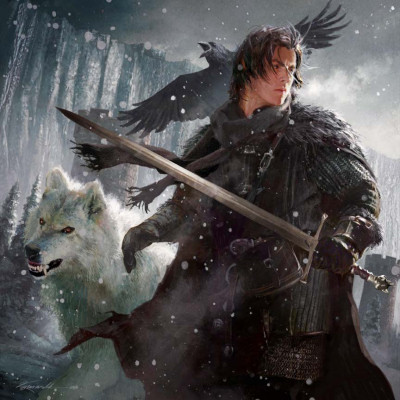
In the aftermath of the Dragon War people moved into the wild untamed places of Cimmeria such as the Black River watershed. These early settlers needed protection. Many volunteered to be rangers trained by the elves that lived in the Valor Forest. Restnor the First was among the initial group of rangers slaying monsters and protecting the people that made their homes along the Black River’s tributaries. Restnor the First had a child with an elf. When the child was old enough, Restnor took him and raised him on the road while he battled against all manner of threats to civilized life.
Restnor the Second was not just trained to be a ranger, he was born a ranger. He inherited his father’s body and his mother’s senses, giving Restnor Junior the perfect form for being a ranger. The child grew, learning everything from his father and even more from occasional visits to his mother and her people. When the time came for Restnor the First to retire, Restnor the Second took his place among the rangers protecting the people of the Black River watershed.
Restnor took on many challenges during his time as a ranger. His hyperactive senses gave him early warnings that bordered on paranoia. Restnor was never caught unawares or ambushed, but he rarely slept through the night and he frequently reacted to phantom attacks that were only in his imagination. Regardless, his skills served him well. When the lizardfolk chieftains united under King Blacktooth, Restnor the Second called the scattered rangers together to halt the scaled king’s reign of terror. With their combined might and Restnor’s leadership, Blacktooth was defeated and his forces scattered, never to threaten civilization again.
Restnor the Second had occasional dalliances with girls in the towns he visited for supplies, but never anything permanent. The human woman he saw most frequently, Delilah, ended up bearing him his only child. Their son showed the same childhood behaviors as his father and grandfather, so he earned the same name, Restnor, as the boy “would neither rest nor sleep.”
Restnor the Third grew quickly in Delilah’s care. She often saw him playing make-believe as he slew monsters in his head. Delilah didn’t know that the monsters that little Restnor saw were as real to him as the fingers on his hand. Little Restnor’s private visions separated him from the other children of his community. Rejected by them, Restnor spent much of his free time at the Temple of Hephaestus in his hometown of Dalleer where the priests gladly accepted all petitioners. Restnor the Third learned the basics of smithing and mining which were taught in the temple.
Restnor the Second returned at the end of every year after a ranging, hoping that his son would be ready to join him. Every year, he was disappointed. Little Restnor had chicken pox, or little Restnor had broken his arm, or little Restnor wouldn’t leave until he’d learned the right temperature for smelting gold. Restnor the Second taught his son what he could during the winters he spent with him, but his son did not receive the same level of direct training that Restnor the Second got from his father.
When Restnor the Third turned sixteen, his father decided it was time. He would be a ranger whether he had mastered the folded steel technique for forging swords or not. Little Restnor reluctantly left with his father to harass a group of lizardfolk that threatened a group of outlying settlements. If there was one thing little Restnor did well it was learn. Although a ranger’s life is not one he would choose for himself, he recognized the works importance to his father and to the people of the land. He would do his duty for a time, but he planned to return to the temple of Hephaestus in a few years. Restnor’s calling was the building of civilization, not its protection.
Little Restnor’s dreams were cut short. He had grown accustomed to ignoring his father’s idle paranoid behavior. His father gave him orders to secure the perimeter, take the night watch, and set up snares, but nothing bad ever happened. Why do all that work for no benefit? One moonless night, little Restnor neglected his duties and lizardfolk attacked the camp. Restnor the Second was slain protecting Restnor the Third’s retreat.
Restnor the Third went into a dark depression. He began experiencing eternal waking dreams, visions the walked the line between reality and imagination. He hunted the lizardfolk who killed his family, but in his mind they were fire-breathing demons. Restnor obtained vengeance for his father, but his psychosis only deepened. He journeyed far into the Terror Mountains and did not return to civilization for the winter as the other rangers did.
Restnor claimed that he received visions from Hephaestus in the mountains. The lame smith showed Restnor to food, water, and shelter. Restnor had long conversations with his patron. How could he help the people of the watershed? Should he continue as a ranger or become a Priest of Hephaestus?
“Neither,” said Hephaestus, “My father will send you a sign. Follow it to your destiny.”
Restnor waited in the mountains for this sign through the whole winter. With March came the first thunderstorm of the season. Watching the lightning crash upon the peaks, Restnor spied a moving piece of darkness. He looked closer and saw an eagle, silhouetted against the storm clouds. Zeus’s bird amidst Zeus’s majesty! The sign! Restnor grabbed his belongings and followed the eagle’s flight.
The eagle led Restnor to a great treasure. The ranger followed the bird for many days, eastward, to the edge of the mountains. The bird stopped beside a waterfall. Restnor caught his breath and watched the eagle. It cawed at him, scratched the wet stone it perched on, and dived through the waterfall. Restnor stared in shock and then followed through the curtain of water. Behind the water was a glittering cavern. The rough walls were lined with gold of the purest variety. This was the richest vein ever discovered. Restnor cried in triumph and flung his arms out. The eagle screeched and landed sharply on Restnor’s outstretched arm. Feeling the bird’s tight grip Restnor turned to it and said, “We’ll call you Talon, my friend.” The bird cooed its approval.
Restnor and Talon returned to Dalleer. Restnor still experienced many waking visions that disrupted his interaction with the people of the city. He told the citizens of his discovery in the mountains, but none believed him. Frustrated, he made a large bet that the treasure was real. A few men accepted the bet, thinking that Restnor had imagined the gold deposit in a schizophrenic episode. Restnor hired some beggars, the outcasts that Hephaestus watched over, to help uncover more of the gold. He set out with his employees and the betting men to show the truth of the mine.
Restnor was proven right when the group returned to the waterfall. The betting men considered reneging on their bet and turning on Restnor, but the predatory glint in his eye halted such plans. They made good on their bet. Restnor used the money to finance a mining operation. He employed people with other socially devastating disabilities such as his own. The physically and mentally disabled became his followers. The waterfall and the river became known as Talon’s Waterfall and Talon’s Bed respectively. The town took the name Restnor’s Point after its founder.
Restnor the Third gave up ranging to organize the town. He brought more and more people to settle in the town and built a temple to Hephaestus in the cliff by the waterfall. On Restnor’s death, the old bird Talon cried and flew away from the town leaving behind his many egglings, never to be seen again. Restnor’s body was burned in the smith’s holy fire. As his ashes circled towards the heavens a light shone upon the town. The townsfolk blinked away tears in their grief and when they opened their eyes Restnor’s Point was surrounded by huge adamantine walls. Restnor would continue to protect and serve the town even in his death.
Restnor the Third had no children, but Talon did. The eagle’s offspring were bred with magical birds to make the rare breed known as asestaro. Asestaros are the city bird of Restnor’s Point and they make fearsome hunters. Some say that the spirits of Restnor and Talon live on in every asestaro.
-GoCorral





Leave a Reply