The most significant part of your character in Dungeons and Dragons is their class. Cimmeria wouldn’t be a true 5e campaign setting without some class options of its own! Here’s at least one for each class.
Barbarian
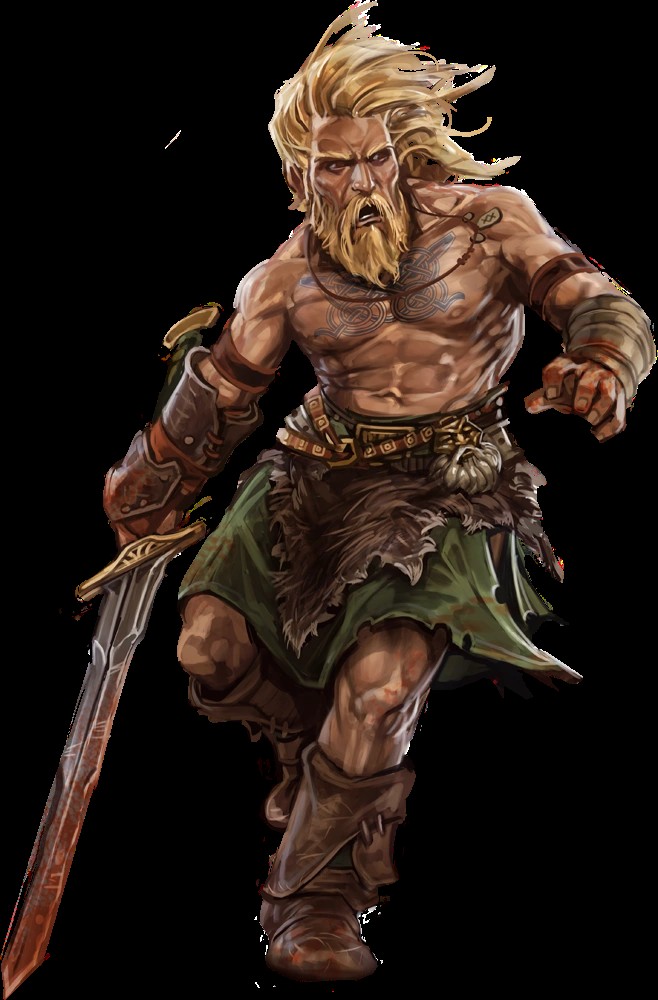
Barbarians with a connection to banished gods may follow the Path of the Earthshaker. These ancient gods of Cimmeria were locked away by the Olympians. The Titans, the Goblin gods, and monstrous deities, all or none of these could be the source or inspiration for a barbarian’s power. As these great beings shake the earth, so too does an Earthshaker barbarian. When opponents are knocked off balance the axe can be brought down upon their heads.
Path of the Earthshaker Details
Ground Pound
Level 3: When you cause a creature to have the Prone condition while your Rage is active, you may make an extra attack against it.
Execution Strike
Level 6: Your Rage Damage is doubled against Prone targets.
Seismic Upheaval
Level 10: While your Rage is active, you have Advantage on ability checks and saving throws made to resist being pushed, pulled, or knocked Prone. Additionally, difficult terrain composed of earth or stone doesn’t cost you extra movement.
Wrath of the Earthshaker
Level 14: While your Rage is active you may use an action to create an effect similar to the Earthquake spell. The spell is centered on your location and you are unaffected by it. Once you use this feature, you can’t use it again until you finish a Long Rest unless you expend a use of your Rage (no action required) to restore your use of it.
Bard
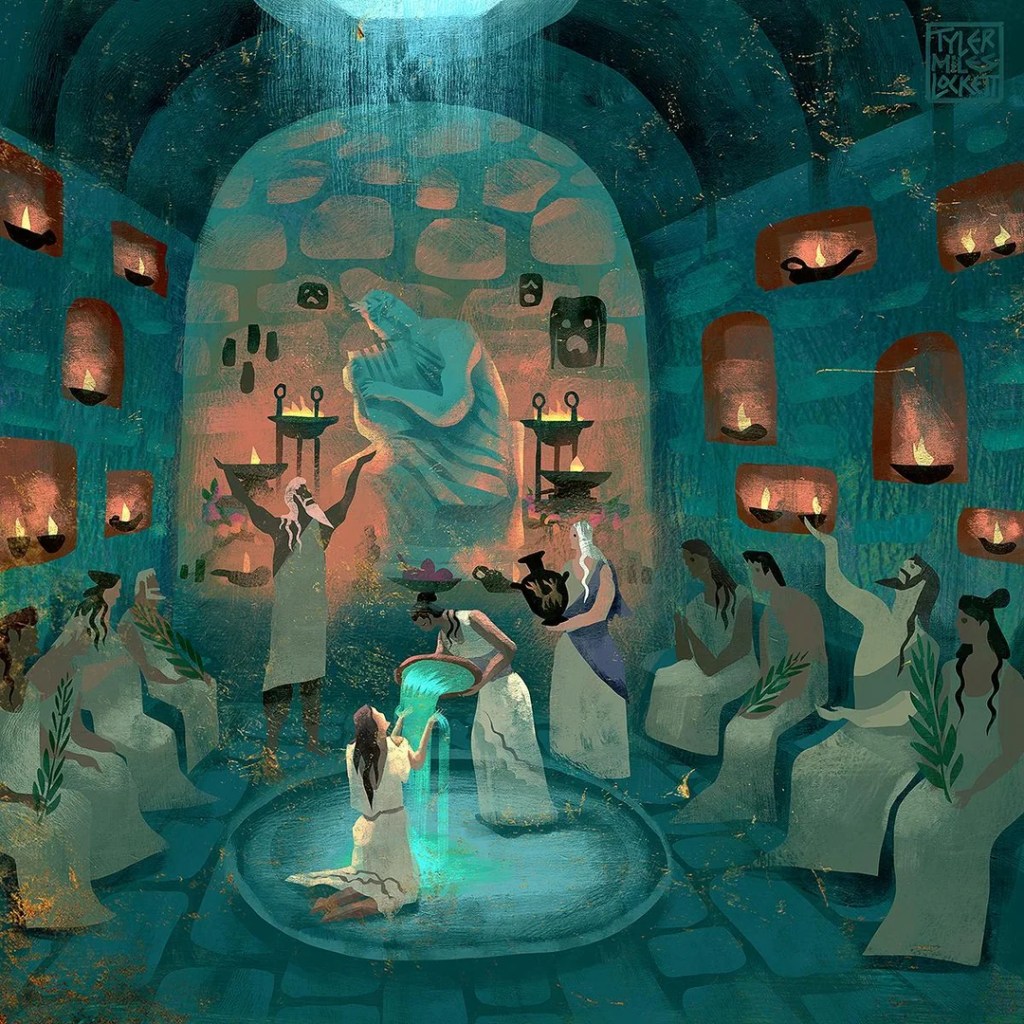
Bards of the College of Mysteries use their magic and skills to venerate the Olympian gods. These bards study the greatest stories of the age about the gods and their champions. The most sacred knowledge of the gods pertains to healing and life after death. Through joining the mystery cults of Cimmeria, a College of Mysteries Bard can conquer the greatest foe of all mortals, death itself.
College of Mysteries Details
Mysteries Healing
Level 3: When a creature spends your Bardic Inspiration die, they also restore Hit Points equal to the number rolled on the Bardic Inspiration die.
College of Mysteries Spells
Level 3: The magic of the Mysteries ensures you always have certain spells ready; when you reach a Bard level specified in the College of Mysteries Spells table, you thereafter always have the listed spells prepared.
| Bard Level | Spells |
|---|---|
| 3 | Healing Word, Lesser Restoration, Spare the Dying |
| 5 | Revivify |
| 7 | Aura of Life |
| 9 | Mass Cure Wounds |
Mystery Cult Initiate
Level 6: You join a mystery cult. Decide which cult and the circumstances for your joining with your GM. You gain 5 Favor with the associated deity of that cult which grants benefits if they are your Patron Deity.
Emboldened Heroes
Level 6: A creature with one of your Bardic Inspiration dice has Advantage on saving throws you make to avoid or end the Frightened condition.
Additionally, you can take the Help action as a Bonus Action.
Warrior of Song
Level 14: As an action, you touch an adjacent willing creature to imbue them with all the power of the Muses. For 1 hour the creature can expend this power by taking a Bonus Action to cast one of the following spells heightened to 5th level without needing Material components. The spell uses your spellcasting ability modifier and Proficiency Bonus. Once you use this feature, you can’t use it again until you finish a Short Rest or Long Rest.
Each of the spells is associated with one of the Nine Muses.
- Calliope – Herosim
- Clio – Legend Lore
- Erato – Choral Ward (New Spell!)
- Euterpe – Hypnotic Pattern
- Melpomene – Overwhelming Grief (New Spell!)
- Polyhymnia – Guardian of Faith
- Terpsichore – Graceful Step (New Spell!)
- Thalia – Tasha’s Hideous Laughter
- Urania – Shooting Star (New Spell!)
Cleric
There are many planned Domains for the Cleric class. At the moment I’d like to do Glory, Sea, Darkness, Oracle, Twelve Olympians, Community, Love, and Entertainment. I’d also like to make my own versions of Death, Forge, Knowledge, and Nature even though they already exist within 5.0 or 5.5 rules. Oracle and Sea are done.
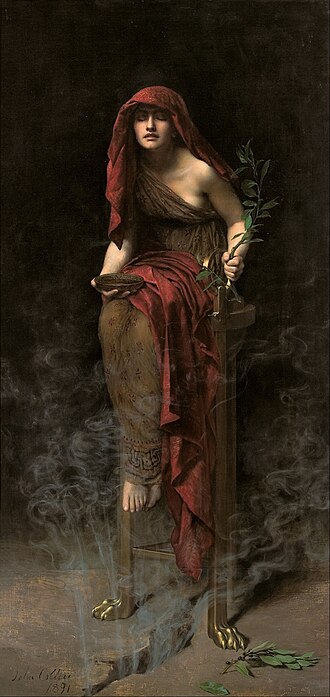
The Oracle Domain represents the power of prophecy and fate. Clerics of this domain can see the future and through their divine powers, influence the course of events.
The primary gods of the Oracle Domain are the Fates. They rarely interact directly with mortals. Instead, Zeus acts as a liaison to the Fates. He has passed some of this responsibility to his son, Apollo, to manage. Additionally, Hecate maintains a relationship with the Fates that existed before Zeus took the throne.
Oracle Domain Details
Futuresight
Level 3: Whenever you finish a Long Rest, roll a d20 and record the result as your Oracle roll. You can expend your Oracle roll as a replacement for a D20 Test made by you or a creature you’re aware of within 30 feet. When you finish a Long Rest, you lose unused Oracle rolls.
Oracle Domain Spells
Level 3: Your connection to this divine domain ensures you always have certain spells ready. When you reach a Cleric level specified in the Oracle Domain Spells table, you thereafter always have the listed spells prepared.
| Cleric Level | Spells |
|---|---|
| 3 | Augury, Detect Evil and Good, Detect Magic, Detect Poison, Locate Object |
| 5 | Speak with Dead, Tongues |
| 7 | Divination, Locate Creature |
| 9 | Commune, Dream |
Sudden Premonition
Level 3: You’re able to sense danger as it approaches, allowing you to shout a warning at the last second. When you or a creature you’re aware of within 30 feet would fail a saving throw, you can expend a use of your Channel Divinity and take a Reaction to cause the save to be rerolled, and the new roll has Advantage.
Write Fate
Level 6: You look briefly into the future and know the path forward. At the start of your turn you can activate this feature. If you do, roll a d20. On a result of 1-10, you have Advantage on all attack rolls you make until the start of your next turn. On a result of 11-20, creatures have Disadvantage on any saving throw caused by you until the start of your next turn. Once you use this feature, you can’t use it again until you finish a Long Rest.
Greater Futuresight
Level 17: Whenever you finish a Long Rest, you roll two d20s for your Oracle rolls instead of one. You can only use one Oracle roll per turn.
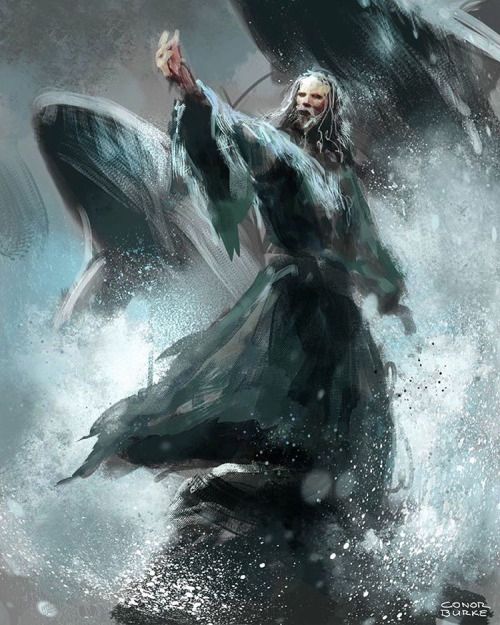
The Sea Domain bestows on its wielders all the power and dangerous potential of the vast deep. Clerics who follow this path love the open water and the freedom of traveling across the world.
While there are many smaller divinities of the seas, and waterways of the world, Poseidon stands above them all. His divine influence extends to include horse husbandry and the power of earthquakes. Many Clerics that wield the ceaseless force of the Sea Domain also practice earth and animal magic in honor of Poseidon’s other areas of influence.
Sea Domain Details
Creature of Water
Level 3: Your devotion to the sea grants you the following benefits:
- You gain a Swim Speed equal to your Speed. If you already had a Swim Speed it increases by 15 feet.
- You can hold your breath twice as long as normal.
- You can speak clearly underwater without losing your breath.
- You can comprehend and verbally communicate with any Beast with a Swim Speed.
- You gain proficiency with Navigator’s Tools.
Old Salt’s Confidence
Level 3: As a Magic action, you can expend one use of your Channel Divinity to embolden a fellow compatriot. A creature you can see within 30 feet gains Temporary Hit Points equal to twice your Cleric level. Additionally, choose an ability. The target gains Advantage on ability checks made with that ability until the end of your next turn.
Sea Domain Spells
Level 3: Your connection to this divine domain ensures you always have certain spells ready. When you reach a Cleric level specified in the Sea Domain Spells table, you thereafter always have the listed spells prepared.
| Cleric Level | Spells |
|---|---|
| 3 | Fish’s Embrace, Fog Cloud, Hydro Blast (New Spell!), Wall of Water (New Spell!) |
| 5 | Water Breathing, Water Walk |
| 7 | Control Water, Evard’s Black Tentacles |
| 9 | Conjure Elemental (Water only), Roaring Waterfall (New Spell!) |
Drown the Rats
Level 6: As a Magic action, you can expend one use of your Channel Divinity to encase a creature’s head in water. You point your Holy Symbol at another creature you can see within 30 feet of yourself. The target must succeed on a Constitution saving throw, or a globe of water forms around the target’s head, cutting off its access to air. The target begins suffocating unless it can breathe water. At the end of each of its turns, the target repeats the save, ending the effect on itself on a success.
Pull Together
Level 17: After you take the Help action, your allies can join in assisting. Other creatures can take a Bonus action or Reaction to use a Help action to assist with the same action. Each additional creature assisting grants a +1 bonus to the ability check or attack roll.
Druid
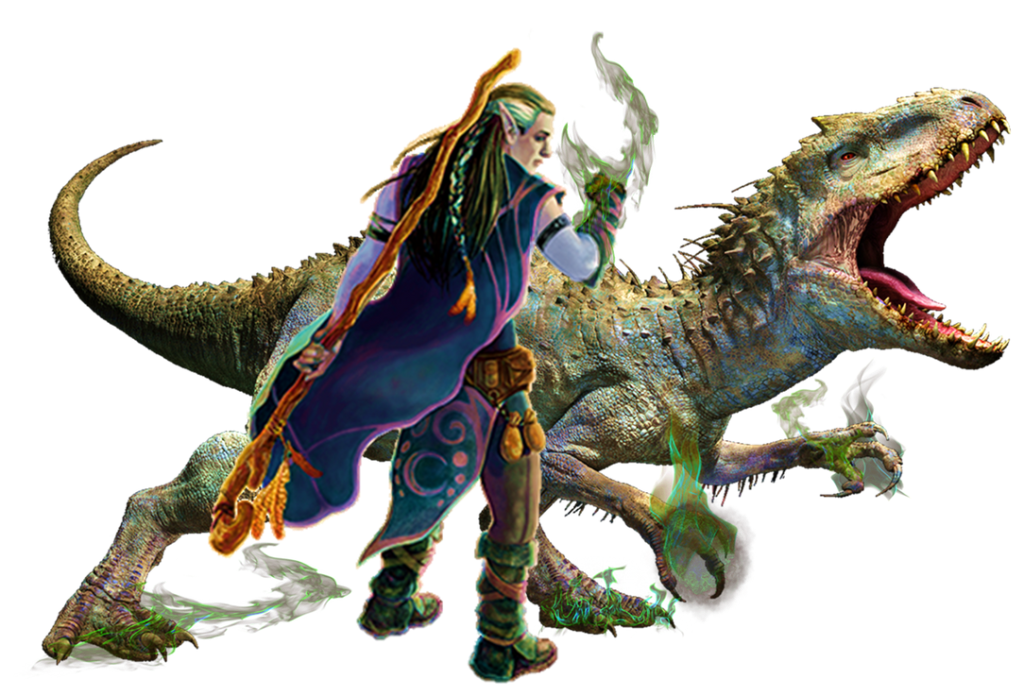
Northwest of Cimmeria is the mysterious land of the Dark Reaches. Fearsome monsters and foul beasts lurk within the region and none more prevalent than the many species of dinosaurs. These powerful creatures are the greatest beasts that walk Gaia’s surface without magical empowerment. Some druids traveled to the Dark Reaches to learn more about dinosaurs. These druids returned to Cimmeria with knowledge of the forms of the dinosaur. They established the first Circle of the Dinosaur that has passed down the powerful wild shape abilities to future druids.
Circle of the Dinosaur Details
This subclass requires lots of dinosaur monsters to transform into. There are only seven official ones available for free on D&D Beyond: Pteranodon (CR 1/4), Allosaurus (CR 2), Plesiosaurus (CR 2), Ankylosaurus (CR 3), Archelon (CR 4), Triceratops (CR 5), and Tyrannosaurus Rex (CR 8). I’ve created additional ones to round out the numbers. These additional dinosaurs are available in the Monsters of Cimmeria page.
Prehistoric Savagery
Level 3: Your Wild Shape is enhanced when you take on a dinosaur shape. You gain the following benefits:
Dinosaur Forms. The maximum Challenge Rating for your known forms equals your Druid level divided by 2 (round down) as long as those forms are dinosaurs. Otherwise, the usual maximum is used.
Ferocious Weaponry. Your attacks granted by a Wild Shape form deal 1d6 bonus damage. The extra damage’s type is the same as the attack’s type.
Rocky Hide. The AC granted by a Wild Shape form is increased by 2.
Circle of the Dinosaur Spells
Level 3: When you reach a Druid level specified in the Circle of the Dinosaur Spells table, you thereafter always have the listed spells prepared. In addition, you can cast the spells from this feature while you’re in a Wild Shape form.
| Druid Level | Prepared Spells |
|---|---|
| 3 | Longstrider, Resistance, Summon Beast |
| 5 | Conjure Animals |
| 7 | Fire Shield |
| 9 | Commune With Nature |
Enhanced Ferocious Weaponry
Level 6: The bonus damage from the Ferocious Weaponry effect of your Prehistoric Savagery feature increases to 2d6. Additionally, whenever you deal damage with an attack in a Wild Shape form, it can deal your choice of Force damage or its normal damage type.
Symbiotic Power
Level 10: Your druidic magic further adapts to encompass the power of the dinosaur. You gain the following benefits:
Friendly Dinosaur. As a Magic action, you can cast Summon Beast or Conjure Animals at your highest spell level without expending a spell slot or needing Material components. You can’t use this feature again until you finish a Long Rest.
Vestments of Nature. When you use Wild Shape you may choose to have your equipment change size and shape to fit your new form. This allows your armor and magic items to function in your new form but you are still limited by your form’s limbs in what you can hold. While transformed your AC is the higher of what is granted by your form or your armor.
Titan Form
Level 14: Your Wild Shape forms become terrifying larger than ever. You gain the following benefits:
Supreme Ferocious Weaponry. The bonus damage from the Ferocious Weaponry effect of your Prehistoric Savagery feature increases to 3d6.
Increased Grit. When you assume a dinosaur Wild Shape form, you gain a number of Temporary Hit Points equal to three times your Druid level.
Almighty Lizard. When activating your Wild Shape you can take on a form that is one size larger than normal for the Beast you transform into. This increases your space appropriately as well as adding 5 feet to the reach of all your form’s attacks.
Fighter
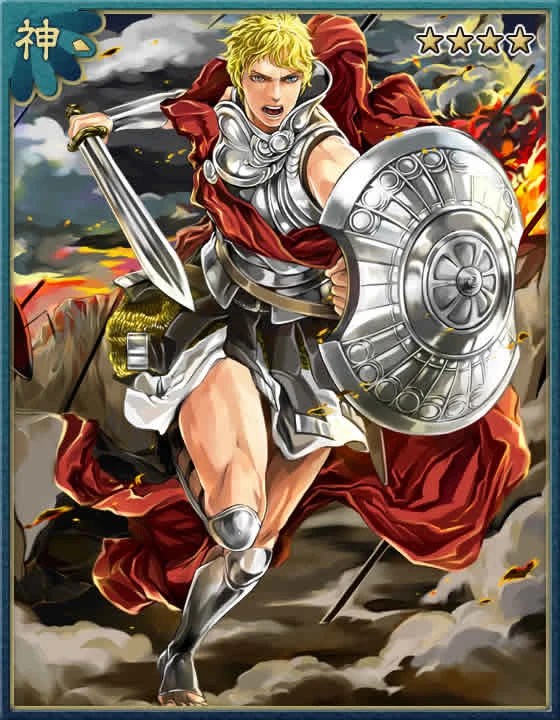
The Deadly Charger method of fighting is brutal and effective. Fighters that adopt this subclass rush around the battlefield, quickly defeating one foe after another. You use a combination of swinging your weapon and slamming your body against your opponents to control the flow of combat. The Deadly Charger way isn’t without risks though. You must always be on the move and in the thick of the fight to be at your best.
Deadly Charger Details
Pushing Charge
Level 3: You’re skilled at hitting foes with your weapon and forcing them backwards at the same time. When you move towards a creature and hit it with a melee attack in the same turn, you may use a Bonus Action to push the target. The target must succeed on a Strength or Dexterity saving throw (it chooses which), or you either push it 5 feet away or cause it to have the Prone condition. The DC for the saving throw equals 8 plus the bonus used on your melee attack to hit the target. This push is possible only if the target is no more than one size larger than you.
Additionally, when you push a creature within your reach with any effect, you may move into any space it left after your push.
Master Rush
Level 7: You become an expert at charging and rushing your opponents. You gain the following benefits:
Power Slug. When you move towards a creature and hit it with a melee attack in the same turn, you add your Strength modifier twice to the damage instead of once.
Full Momentum. Your effects that push creatures are not limited by the size of your target. Additionally, any effect of yours that pushes a creature, pushes it an additional 5 feet.
Wall Slam
Level 10: Your pushes gain extra strength beyond peer.
If you push a creature into another creature, both creatures must succeed on a Strength or Dexterity saving throw (each creature chooses which), or have the Prone condition. The DC for the saving throw equals 8 plus your Strength modifier and Proficiency Bonus.
If you push a creature against a solid obstacle, the creature and the object take 2d8 Bludgeoning damage. A creature can be damaged by this feature only once per turn.
Cleaving Charge
Level 15: Your battle charge has limitless potential. When you move towards a creature and reduce it to 0 Hit Points with a melee attack in the same turn, you may move up to your speed and make a melee attack against another creature.
Titanic Surge
Level 18: You’ve unlocked the full power of your heroic charge. The number of feet you can push a creature with any effect doubles. Additionally, the damage of your Wall Slam feature increases to 4d8.
Monk

Those that follow the Crescent Moon gain dark powers to distract and defeat their enemies. The Way of the Crescent Moon was first developed by the survivalists of Nomingburg. Over centuries their style and training evolved into the Ninja Guild of Nomingburg which is the primary organization that educates people on the Crescent Moon. Practitioners learn how to move unseen and slay their targets without leaving a trace.
Warrior of the Crescent Moon Details
Ghost Step
Level 3: As a Magic action, you can expend 1 Focus Point to give yourself the Invisible condition until the end of your next turn. This effect ends immediately after you make an attack roll, deal damage, or cast a spell.
Ninja’s Sneak Attack
Level 3: You know how to strike subtly and exploit a foe’s distraction. Once per turn, you can deal an extra 1d6 damage to one creature you hit with an attack roll if you have Advantage on the roll and the attack uses an Unarmed Strike or a Monk weapon. The extra damage’s type is the same as the weapon’s type.
You don’t need Advantage on the attack roll if at least one of your allies is within 5 feet of the target, the ally doesn’t have the Incapacitated condition, and you don’t have Disadvantage on the attack roll.
As you gain levels in Monk, your Ninja’s Sneak Attack improves. The extra damage increases by 1d6 when you reach levels 5 (2d6), 11 (3d6), and 17 (4d6).
Way of Deception
Level 3: Your initial training in the Crescent Moon comes with some practical benefits. You gain proficiency in the Deception skill and proficiency with the Disguise Kit and the Poisoner’s Kit.
Ki Magic
Level 6: As a Magic action, you can expend 1 Focus Point to cast one of the following spells: Blink, Hypnotic Pattern, See Invisibility, and Spider Climb. You use Wisdom as your spellcasting ability for these spells.
Improved Ghost Step
Level 11: When you are hit by an attack you can take a Reaction to replace yourself with an illusory duplicate. Expend 2 Focus Points to teleport to gain Resistance against the attack. After the attack, your duplicate is destroyed and you teleport to an unoccupied space you can see within 30 feet.
You gain the Invisible condition until the start of your next turn. This effect ends immediately after you make an attack roll, deal damage, or cast a spell.
Open the Moon Gate
Level 17: When you find a weakness you exploit it to its fullest. After damaging a creature with your Ninja’s Sneak Attack, expend 3 Focus Points to ignore the once per turn restriction of your Ninja’s Sneak Attack when attacking that creature until the end of your turn.
Paladin
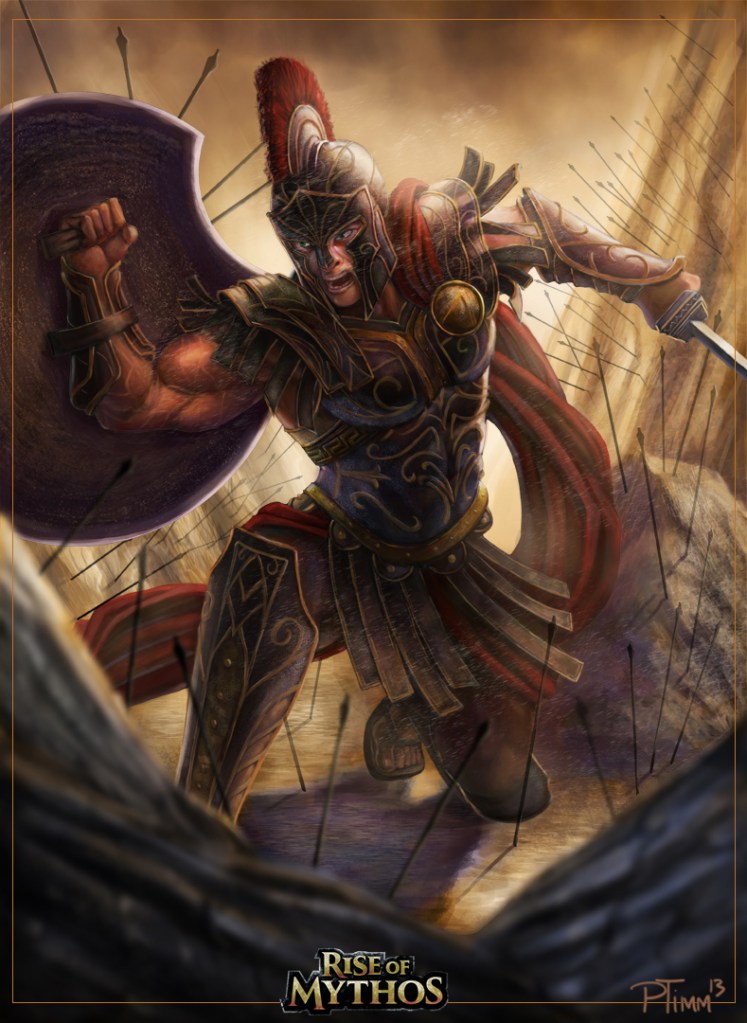
Paladins who take the Oath of Battle have promised to vanquish all foes, no matter the cost. Supremacy in battle comes before all other things. Nothing stops an Oath of Battle Paladin except death. They strike fear in the hearts of their enemies as they storm across the battlefield. The paladin draws the attention of his foes and then inflicts pain and suffering without end.
Oath of Battle Details
Oath of Battle Paladins share the following tenets:
- Never let an enemy escape alive.
- You are nothing without your fellow warriors.
- Defeat is not an option.
Oath of Battle Spells
Level 3: The magic of your oath ensures you always have certain spells ready; when you reach a Paladin level specified in the Oath of Battle Spells table, you thereafter always have the listed spells prepared.
| Paladin Level | Spells |
|---|---|
| 3 | Command, Compelled Duel |
| 5 | Earthbind, Shining Smite |
| 9 | Fear, Incite Greed |
| 13 | Fabricate, Shadow of Moil |
| 17 | Destructive Wave, Geas |
Painful Touch
Level 3: As a Magic Action, you can expend one use of your Channel Divinity to use your Lay On Hands to inflict injury upon your enemies. Make a melee spell attack against a target within reach. On a hit, the creatures takes Radiant damage equal to a number of points you spend from your Lay On Hands pool.
Aura of Fear
Level 7: Enemies that start their turn in your Aura of Protection must make a Wisdom saving throw (DC 8 plus your Charisma modifier and Proficiency Bonus). On a failed save, the creature is Frightened until the start of its next turn.
River of Death
Level 15: As an Attack action, you may attack every opponent on your way to your target. You move up to your speed and must end your turn adjacent to an enemy. During this move make an attack against each creature of your choice within your reach. Once you use this feature, you can’t do so again until you finish a Long Rest.
Paragon of the Gods
Level 20: As a Bonus Action, you assume a form worthy of eternal legend, granting the benefits below for 1 minute or until you end them (no action required). Once you use this feature, you can’t use it again until you finish a Long Rest. You can also restore your use of it by expending a level 5 spell slot (no action required).
Claim the Glory. When a creature within 30 feet of you is reduced to 0 Hit Points, you can take a Reaction to move up to your speed towards that creature. After moving you make one melee attack against that creature or another creature within reach. If your attack hits, you gain Temporary Hit Points equal to your Charisma modifier.
Aura of Awe. Creatures of your choice in your Aura of Protection have Disadvantage on saving throws against being Frightened. If a Frightened creature takes damage from you, it takes additional Radiant damage equal to your Proficiency Bonus.
Ranger

The ranger subclass of swordmage grew from the teachings of the famous heroes Galandir and Tereman. These two warriors helped end the githyanki occupation of Cimmeria. After they retired, they taught the next generation the way of the swordmage. A perfect combination of sword and magic. Swordmages are able to cast spells as they attack with their weapons. The training required for the style is not for the faint of heart, but those who can endure become some of the finest warriors in all of Cimmeria.
Swordmage Details
Swordmage Casting
Level 3: You are able to incorporate the motions required for spellcasting into the movement of your weapons in combat. You do not need to have a free hand to cast a spell with a Somatic component.
Swordmage Spells
Level 3: Your magical talents go beyond the typical spells of other rangers. You learn two 1st level spells of your choice from the Wizard spell list. You learn additional spells as you level up according to the following table.
| Ranger Level | Additional Spells |
|---|---|
| 5 | Two 2nd level spells |
| 9 | Two 3rd level spells |
| 13 | Two 4th level spells |
| 17 | Two 5th level spells |
You always have the chosen spells prepared, and whenever you gain a Ranger level, you can replace one of the spells with another Wizard spell of the same level.
Swordmage Style
Level 7: Your mastery of magic increases, allowing you to attack and cast spells at the same time. After you take the Attack action you can use a Bonus Action to take a Magic action as well. Your Magic action must use a feature granted by this class and target yourself or a creature you attacked this turn. The weapon you made your attack with can be used as a Spellcasting Focus for the Magic action.
Arcane Hold
Level 11: You gain a new telekinetic trick to protect yourself and your allies. When a creature moves adjacent to you or an adjacent ally, you can take a Reaction to telekinetically shove the creature. The creature must succeed on a Strength or Dexterity saving throw (it chooses which), or you either push it 5 feet away or cause it to have the Prone condition. The DC for the saving throw equals 8 plus your Wisdom modifier and Proficiency Bonus. This shove is possible only if the target is no more than one size larger than you. Once you use this feature, you can’t use it again until you finish a Short or Long Rest.
Cut Through Time
Level 15: You have learned to cut through time itself to help yourself in difficult times. When another creature ends its turn, you can take a Reaction to create a magical duplicate of yourself within 60 feet. This is a version of yourself from a possible future. The duplicate has the same statistics, abilities, and equipment as you. The duplicate immediately takes a turn and may act just as you would. When the duplicate’s turn ends it and its equipment vanish as the timeline changes to a new future. Once you use this feature, you can’t use it again until you finish a Long Rest.
Rogue
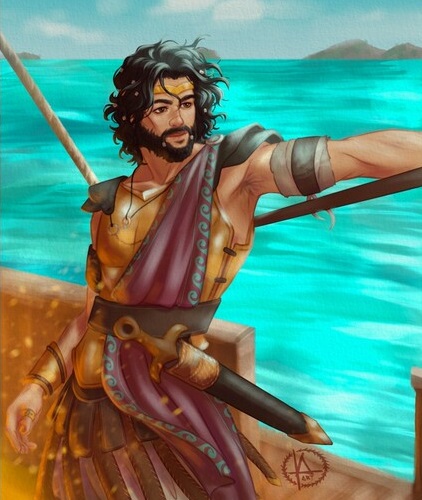
Cunning Captains follow in the footsteps of the greatest rogue of all time, Odysseus. You command allies while relying on wit, preparation, and quick thinking to overcome impossible odds. You know that outsmarting your opponent is the best path to victory over pure brute strength. Whether leading companions through perilous adventures, devising clever stratagems in the heat of battle, or turning an enemy’s strength against them, you prove that a sharp mind is the deadliest weapon of all.
Cunning Captain Details
Skirmish Commander
Level 3: Your experience has expanded your options. You learn techniques that are fueled by special dice called Skirmish Dice.
Techniques. You learn three techniques of your choice from the “Technique Options” section later in this subclass’s description. Many techniques enhance an attack in some way. You can use only one technique per attack. You learn two additional techniques of your choice when you reach Rogue levels 9, 13, and 17. Each time you gain Rogue levels, you can replace one technique you know with a different one.
Skirmish Dice. You have four Skirmish Dice, which are d8s. A Skirmish Die is expended when you use it. You regain all expended Skirmish Dice when you finish a Short or Long Rest. You gain an additional Skirmish Die when you reach Rogue levels 9 (five dice total) and 13 (six dice total).
Saving Throws. If a technique requires a saving throw, the DC equals 8 plus your Dexterity or Charisma modifier (your choice) and Proficiency Bonus.
Battle Experience
Level 3: You have honed your martial prowess and gain a Fighting Style feat of your choice. Whenever you gain a Rogue level, you can replace the feat you chose with a different Fighting Style feat.
Additionally, you gain training with Medium armor and Shields.
Hardened Combatant
Level 9: The many battles you’ve endured made you strong, granting you the following benefits:
Extra Attack. You can attack twice instead of once whenever you take the Attack action on your turn.
Improved Skirmish Commander. Your Skirmish Die becomes a d10.
Medium Armor Legend. While you’re wearing Medium armor, you can add your whole Dexterity modifier to your AC if you have a Dexterity score of 16 or higher.
Crafty Stratagem
Level 13: When you deal Sneak Attack damage, you regain one Skirmish Die.
Ultimate Skirmish Commander
Level 17: Your Skirmish Die becomes a d12.
Technique Options
The techniques are presented here in alphabetical order.
Ambush.
When you or an ally within 30 feet make a Dexterity (Stealth) check or an initiative roll, you can expend one Skirmish Die and add the die to the roll, provided you aren’t incapacitated.
Commander’s Strike.
When you take the Attack action on your turn, you can replace one of your attacks to direct one of your companions to strike. When you do so, choose a willing creature who can see or hear you and expend one Skirmish Die. That creature can immediately use its Reaction to make one attack with a weapon or an Unarmed Strike, adding the Skirmish Die to the attack’s damage roll on a hit.
Concussion Strike.
When you hit a creature with an attack roll, you can expend one Skirmish Die to attempt to concuss the target. Add the Skirmish Die roll to the attack’s damage roll. The target must succeed on a Constitution saving throw or suffer Disadvantage on its next saving throw before the end of your next turn. Creatures that are immune to Exhaustion automatically succeed on this saving throw.
Cunning Presence.
When you make a Charisma (Deception, Intimidation, Performance, or Persuasion) check, you can expend one Skirmish Die and add that die to the roll.
Daredevil Athlete.
When you make a Strength (Athletics) check or a Dexterity (Acrobatics) check, you can expend one Skirmish Die and add that die to the roll.
Disarming Attack.
When you hit a creature with an attack roll, you can expend one Skirmish Die to attempt to disarm the target. Add the Skirmish Die roll to the attack’s damage roll. The target must succeed on a Strength saving throw or drop one object of your choice that it’s holding, with the object landing in its space.
Distracting Strike.
When you hit a creature with an attack roll, you can expend one Skirmish Die to distract the target. Add the Skirmish Die roll to the attack’s damage roll. The next attack roll against the target by an attacker other than you has Advantage if the attack is made before the start of your next turn.
Effusive Distraction.
As a Bonus Action, you can expend one Skirmish Die to allow an ally to escape detection. Choose one willing creature within 30 feet. That creature can take a Reaction to move up to half its Speed without provoking an Opportunity Attacks. If it ends its turn in a location that is Heavily Obscured or behind Three-Quarters Cover or Total Cover, it can immediately take a Hide action. Add the Skirmish Die to its Dexterity (Stealth) check.
Feinting Attack.
As a Bonus Action, you can expend one Skirmish Die to feint, choosing one creature within 5 feet of yourself as your target. You have Advantage on your next attack roll against that target this turn. If that attack hits, add the Skirmish Die to the attack’s damage roll.
Goading Attack.
When you hit a creature with an attack roll, you can expend one Skirmish Die to attempt to goad the target into attacking you. Add the Skirmish Die to the attack’s damage roll. The target must succeed on a Wisdom saving throw or have Disadvantage on attack rolls against targets other than you until the end of your next turn.
Grappling Strike.
When you hit a creature with a melee attack on your turn, you can expend one Skirmish Die to attempt to grapple the target. Add the Skirmish Die to the attack’s damage roll. Then you may take a Bonus Action to make an Unarmed Strike against the target.
Guiding Strike.
When you hit a creature with an attack roll, you can expend one Skirmish Die to attempt to help your disabled ally strike as well. Choose a willing creature that can hear you and that has the Blinded condition. Before the start of your next turn, add the Skirmish Die to the next attack roll made by the chosen creature against the target of your attack roll.
Inspiring Word.
As a Bonus Action, you can expend one Skirmish Die to embolden an ally with renewed vigor. Choose an ally of yours within 30 feet of yourself who can hear you. They can spend one of their Hit Point Dice to regain Hit Points. Roll the Hit Point Die and add the ally’s Constitution modifier and the Skirmish Die to it. They regain Hit Points equal to the total (minimum of 1 Hit Point).
Maneuvering Attack.
When you hit a creature with an attack roll, you can expend one Skirmish Die to maneuver one of your comrades into another position. Add the Skirmish Die roll to the attack’s damage roll, and choose a willing creature who can see or hear you. That creature can use its Reaction to move up to half its Speed without provoking an Opportunity Attacks from the target of your attack.
Menacing Attack.
When you hit a creature with an attack roll, you can expend one Skirmish Die to attempt to frighten the target. Add the Skirmish Die to the attack’s damage roll. The target must succeed on a Wisdom saving throw or have the Frightened condition until the end of your next turn.
Parry.
When another creature damages you with an attack roll, you can take a Reaction and expend one Skirmish Die to reduce the damage by the number you roll on your Skirmish Die plus your Dexterity or Charisma modifier (your choice).
Precision Attack.
When you miss with an attack roll, you can expend one Skirmish Die, roll that die, and add it to the attack roll, potentially causing the attack to hit.
Rally.
As a Bonus Action, you can expend one Skirmish Die to bolster the resolve of a companion. Choose an ally of yours within 30 feet of yourself who can see or hear you. That creature gains Temporary Hit Points equal to the Skirmish Die roll plus half your Rogue level (round down).
Riposte.
When a creature misses you with an attack roll, you can take a Reaction and expend one Skirmish Die to make a attack roll with a weapon or an Unarmed Strike against the creature. If you hit, add the Skirmish Die to the attack’s damage.
Steadying Word.
As a Bonus Action, you can expend one Skirmish Die to instill courage in a companion. Choose an ally of yours within 30 feet of yourself who can see or hear you. If that creature has the Charmed or Frightened conditions they can make a Wisdom saving throw against the same DC that imposed the condition. Add the Skirmish Die to their saving throw roll. If they succeed they no longer have the Charmed or Frightened conditions.
Tactical Assessment.
When you make an Intelligence (History or Investigation) check or a Wisdom (Insight) check, you can expend one Skirmish Die and add that die to the ability check.
Trip Attack.
When you hit a creature with an attack roll using a weapon or an Unarmed Strike, you can expend one Skirmish Die and add the die to the attack’s damage roll. The target must succeed on a Strength saving throw or have the Prone condition.
Tumbling Attack.
You can expend a Skirmish Die to tumble past an enemy. During this turn you can move through any creature’s space as if it were an ally. Add the Skirmish Die to the damage of the next attack you make this turn against a creature whose space you moved through.
Wiley Strike.
When you deal Sneak Attack damage and add a Cunning Strike effect you can expend Skirmish Dice instead of removing Sneak Attack damage dice as the cost.
Sorcerer

Mind sorcerers use the innate power of the mortal mind to enact their will upon the world. Most sorcerers gain their power through a connection with an ancestor of a powerful lineage, but psionic sorcerers are different. Their magic is a natural progression of mortals becoming more connected to the power within themselves. They wield their own magical power to telepathically and telekinetically influence the world around them. This strange power confuses many traditional practitioners of arcane magic as theoretically every mortal possesses that same reservoir of power to tap into.
Mind Sorcery Details
Mind Spells
Level 3: When you reach a Sorcerer level specified in the Mind Spells table, you thereafter always have the listed spells prepared.
| Sorcerer Level | Spells |
|---|---|
| 3 | Charm Person, Chromatic Orb, Detect Thoughts, Mage Hand, Mind Sliver, Mind Spike |
| 5 | Clairvoyance, Fly |
| 7 | Charm Monster, Otiluke’s Resilient Sphere |
| 9 | Dominate Person, Telekinesis |
Telekinetic Projectile
Level 3: As a Magic Action, you can expend a Sorcery Point to launch an object at a creature. Pick a Small or Medium object within 60 feet that is unattended or held by you. Using your telekinetic powers, you hurl it at a foe within 60 feet of you. Make a ranged spell attack against that creature. On a hit, the creature takes 2d6 bludgeoning or piercing damage as appropriate for the hurled object. This feature’s damage increases by 1d6 when you reach 5th level (3d6), 11th level (4d6), and 17th level (5d6).
Telepathic Link
Level 6: You can communicate telepathically with any creature you are aware of within 100 feet. Additionally, your psychic awareness extends slightly into the future. When you roll Initiative, you have Advantage on the roll.
Overchannel
Level 14: You gain the following Metamagic option.
Overchannel Spell
Cost: 1+X Sorcery Points
When you cast a spell with more powerful effects when cast at a higher level, you can spend 1+X Sorcery Points to increase the effective spell slot level of that spell by X levels. You cannot increase the spell’s level beyond the maximum spell level you can cast.
Psion Uncarnate
Level 18: As a Magic action, you can become a being of pure thought for 1 minute. Your body transforms into an incorporeal version of yourself composed of shining energy. You gain the following benefits while in this form. Once you use this feature, you can’t do so again until you finish a Short or Long Rest.
Flight. You have a flying speed of 30 feet and you can move through other creatures and objects as if they were Difficult Terrain. You take 5 (1d10) Force damage if you end your turn inside an object.
Damage Resistance. You have Resistance to Bludgeoning, Slashing, Piercing, and Poison damage.
Constant Telekinesis. Whenever you use your Metamagic ability, until the end of your turn you may use your Telekinetic Projectile ability as a Bonus Action.
Once you use this feature, you can’t do so again until you finish a Short or Long Rest.
Warlock
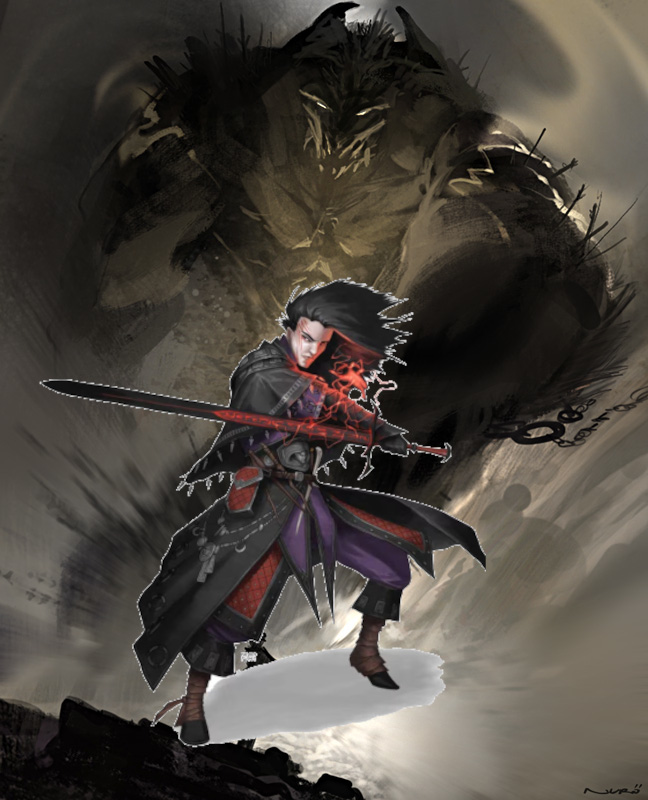
Warlocks who walk this path gain their power from the Ancient Beast. The Ancient Beast is a creature from the Age of Chaos before humans, before the Olympians, and even before the Titans. Some call this creature the Demiurge, others call it Ammutseba. When Zeus became King of the Gods he shattered the Demiurge into a dozen pieces and hid them across the realm. These pieces festered and grew angry. The whispers of the Ancient Beast leak out from their hiding places, granting power to naive warlocks but at what cost?
Ancient Beast Patron Details
Ancient Beast Form
Level 3: You transform into a reflection of the Ancient Beast, gaining a terrifying countenance along with the strength and fortitude for battle. As a Bonus Action, you can shape-shift into your Ancient Beast Form gaining the benefits below for 10 minutes or until you end them (no action required). Once you use this feature, you can’t use it again until you finish a Short or Long Rest.
Armored Hide. While you aren’t wearing any armor, your base Armor Class equals 10 plus your Dexterity and Constitution modifiers. While you’re wearing Light armor, your base Armor Class equals the AC of your armor plus your Dexterity and Constitution modifiers (For example, Leather Armor’s AC is 11 + Dex modifier + Con modifier). You can use a Shield and still gain these benefits.
Preternatural Weaponry. Your body contorts and grows to give you a natural weapon. Your natural weapon can be used to make an Unarmed Strike. If you hit with this Unarmed Strike and deal damage, you can deal Bludgeoning, Piercing, or Slashing damage (your choice) equal to 1d6 plus your Strength modifier, instead of the normal damage of an Unarmed Strike. The natural weapon has the Finesse property and the Vex mastery property. A feature that allows you to use the mastery property is still required. You can use the natural weapon as a Spellcasting Focus.
Additionally, you can use your Charisma modifier for the attack and damage rolls of your natural weapon instead of using Strength or Dexterity.
Antediluvian Sorcery. When you hit with your natural weapon, you can cast a Cantrip as a Bonus Action. The Cantrip must target the creature you hit with your natural weapon.
Ancient Beast Spells
Level 3: The magic of your patron ensures you always have certain spells ready; when you reach a Warlock level specified in the Ancient Beast Spells table, you thereafter always have the listed spells prepared.
| Warlock Level | Spells |
|---|---|
| 3 | Arcane Vigor, Arms of Hadar, Crown of Madness, False Life, Mind Sliver, Mind Spike |
| 5 | Fly, Hunger of Hadar |
| 7 | Evard’s Black Tentacles, Summon Aberration |
| 9 | Synaptic Static, Tenebrous Fury (New Spell!) |
Warrior of the Forbidden
Level 6: You gain the Extra Attack feature for the Preternatural Weaponry effect of your Ancient Beast Form feature only. With that feature, you can attack twice with the natural weapon instead of once when you take the Attack action on your turn.
Additionally, if you have the Pact of the Blade Invocation, the Preternatural Weaponry effect of your Ancient Beast Form counts as your pact weapon and you count as having Thirsting Blade as a prerequisite for other Invocations.
Death Sight
Level 10: Your eyes turn an unnatural color as you gain enhanced sight. You gain the following benefits:
Darkvision. You gain Darkvision with a range of 60 feet. If you already had Darkvision the range increases by 60 feet.
Arcane Iris. You can see magical auras. If you take a Magic action you can identify the school of magic of an aura and the relative power of the magic (1-3 level, 4-6 level or 7-9 level).
Read the Soul. You always have the speak with dead spell prepared and do not require material components to cast it. You can cast speak with dead once without expending a spell slot, and you must finish a Long Rest before you can cast it in this way again.
Hulking Beast. The natural weapon granted by the Preternatural Weaponry effect of your Ancient Beast Form feature gains the Reach property.
Beast Unchained
Level 14: Your Ancient Beast Form encompasses more of your patron’s true essence. You can remain in your Ancient Beast Form indefinitely. Additionally, you gain the following benefits while in your Ancient Beast Form:
Dominate Strikes. When you hit a creature with the Preternatural Weaponry effect of your Ancient Beast Form, you can push the creature 5 feet away.
Devourer of Souls. When you reduce a creature to 0 Hit Points you can restore 10 hit points to yourself.
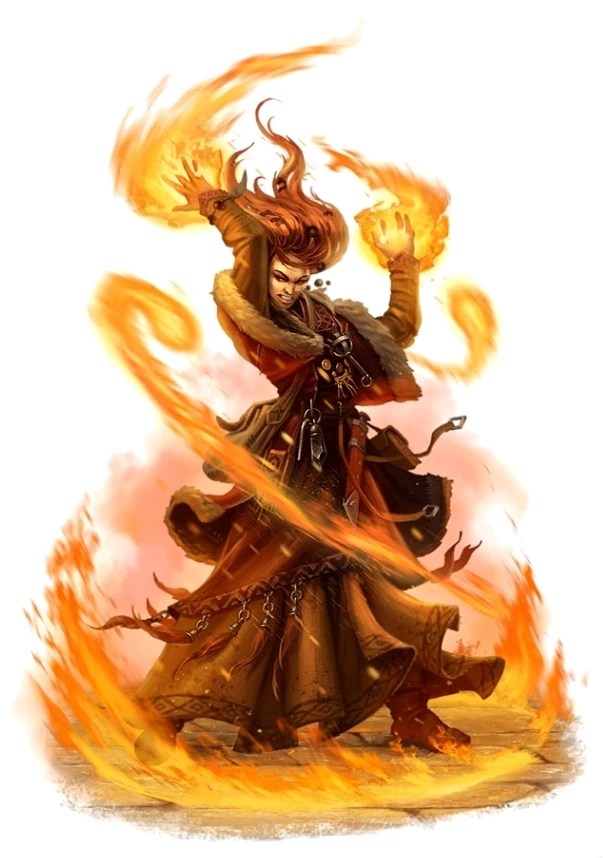
Your pact draws on the power of eternal fire. In Cimmeria, most warlocks with this subclass gain their power from the Great Fire in Gazeara. This fiery icon of the city has burned hot without fuel or source for decades since it was lit by the evil King Shardamar II. The fire consumed the bodies and souls of criminals fed to it and some say it gained sentience over the years. The warlock Logan discovered something in the flame. He became the first to utilize the lifeforce-consuming power of the Great Fire. Others follow in his footsteps, gaining power from the Great Fire or from other sources of flame such as the Sun, volcanoes, or dragons.
Great Flame Patron Details
Great Flame Magic
Level 3: You’ve unlocked the hidden power of the Great Flame but tapping into the volatile energy burns away your own lifeforce. You can activate this feature as a free action whenever you use a Magic action to cast a cantrip. If you do, the damage of the triggering spell is doubled. After you use this feature, you gain 1 Exhaustion level.
During a Short Rest, you may spend 2 or more Hit Point Dice. Instead of regaining Hit Points, you remove 1 Exhaustion level for every 2 Hit Point Dice you spend in this way.
Great Flame Spells
Level 3: The magic of your patron ensures you always have certain spells ready; when you reach a Warlock level specified in the Great Flame Spells table, you thereafter always have the listed spells prepared.
| Warlock Level | Spells |
|---|---|
| 3 | Burning Hands, Flaming Sphere, Hellish Rebuke, Produce Flame, Scorching Ray |
| 5 | Fireball, Protection from Energy |
| 7 | Fire Shield, Wall of Fire |
| 9 | Flame Strike, Greater Restoration |
Advanced Great Flame Magic
Level 6: Your control over the Great Flame improves. You can use your Great Flame Magic feature when you use a Magic action to cast spells that deal Fire damage or use an ability that deals Fire damage.
Unleash the Great Flame
Level 10: The Great Flame can burn all creatures. Any spell or effect you create ignores Resistance to Fire damage and treats Immunity to Fire damage as Resistance to Fire damage. Additionally, you gain Resistance to Fire damage.
Burn It All Away
Level 14: You can become a torch through which the Great Flame burns and purifies the world. As a Magic action, you can call upon the Great Flame to set you on fire. The heat radiating from your body creates a 30-foot Emanation of fire for 1 minute or until you dismiss it (no action required), until you have the Incapacitated condition, or until you die. When a creature enters the Emanation for the first time on a turn or starts its turn there, it must make a Dexterity saving throw, taking 8d6 Fire damage on a failed save or half as much damage on a successful one.
Wizard
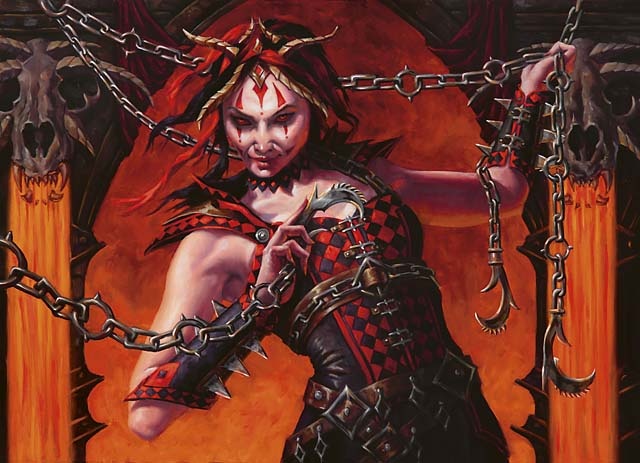
Blood magic is a powerful and dangerous method of magic. By spilling their own blood, blood magi empower their spells to heights that other casting methods cannot reach. The exchange leaves blood magi drained. They are always skating on the edge of victory and death as they bleed to defeat their enemies. Because of its violent nature, blood magic thrives in Nomingburg, the infamous City of Assassins. A blood mages guild exists within the city that offers instruction in the art of blood magic, but only if the prospective guild member kills for the guild.
Blood Mage Details
Blood Magic
Level 3: You can draw your own blood to enhance spells. As part of casting a spell you can inflict an injury on yourself. If you do, your hit point maximum is reduced by 1d4 damage per level of the spell slot you used. This reduction lasts until you finish a Long Rest. Your Proficiency Bonus for the enhanced spell is doubled.
Additionally, you no longer require a spellbook. Instead, you can store your spells on your skin as tattoos or scars.
Blood Draught
Level 6: You can drink a potion and keep its magic stored in your body for a later time. When drinking a potion you may declare that you are using Blood Draught. If you do so, the potion is stored in your blood and has no immediate effect. You can activate the stored potion’s effect at a later time by taking a Reaction whenever you wish. You can only store one potion in your blood at a time. If you try to store an additional potion, the currently stored potion immediately takes effect.
Sanguine Spellrage
Level 10: Your magic power is amplified when injuries cause your blood to flow. The first time you become Bloodied in a combat you may enter the Sanguine Spellrage. The Sanguine Spellrage lasts for 1 minute and provides the following benefits.
Red Fountain of Arcane. When you cast a spell add your Constitution modifier to one damage roll of that spell.
Fast Coagulation. You regain 5 hit points at the start of each of your turns.
You must finish a Long Rest before you can enter the Sanguine Spellrage again.
Blood Stride
Level 14: You can move through the blood of other creatures. As a Magic Action, you step through the bloodways of an Aberration, Beast, Celestial, Dragon, Fey, Fiend, Giant, Humanoid, or Monstrosity that you can see within 250 feet. Teleport to a space adjacent to that creature as you move into its blood and then out of its body. If you wish, you can burst violently out of the target’s body. If you do so the target makes a Constitution saving throw, taking 10d10 damage on a failed save or half as much damage on a successful one. On a failed save, the target also begins bleeding profusely, taking 2d10 points of damage at the start of each of its turns. Any creature can take an action to stanch the wound with a successful DC 15 Wisdom (Medicine) check. The wound also closes if the target receives magical healing. Once you use this feature, you can’t do so again until you finish a Short or Long Rest.