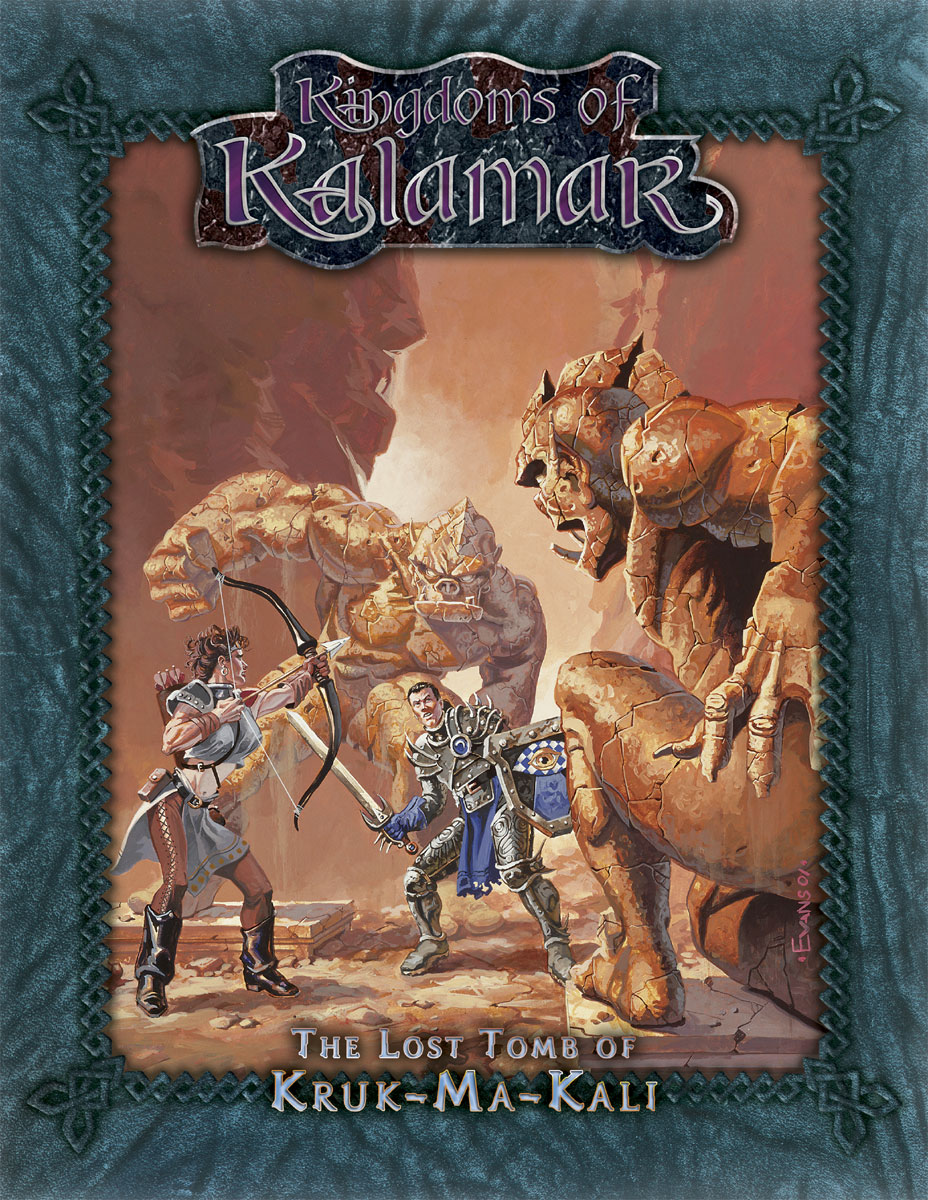
Kruk-Ma-Kali is the main antagonist of Kenzer and Co’s adventure module, The Lost Tomb of Kruk-Ma-Kali. It is a classic tomb raiding adventure. The adventurers must figure out the location of the tomb in a valley filled with native tribes, hidden clues, and red herrings. Once they find the tomb they have to evade monsters and traps to secure the fabled treasure of the dead hobgoblin king, Kruk-Ma-Kali. At the end of the tomb they of course find Kruk-Ma-Kali’s ghost who attempts to possess one of the PCs to restart his goal of world conquest.

I ran this module for my players during my Xorian Wars campaign (the events surrounding the Second Alliance War). They worked through the module slowly, occasionally taking breaks to focus on other events in the campaign world. Eventually they completed it and secured the prize at the end, Kruk-Ma-Kali’s megalomaniac ghost imprisoned within his black sword, Kharad-khor. The sword ended up leaving the campaign as a bargaining chip in negotiations with Hades as Kruk-Ma-Kali had evaded death for far too long.

The Lost Tomb of Kruk-Ma-Kali was originally written for the Kingdoms of Kalamar campaign setting. Putting the module into my campaign world necessitated adapting Kruk-Ma-Kali’s place in the history of Kingdoms of Kalamar to work with Cimmeria’s history. In the Kingdoms of Kalamar Kruk-Ma-Kali fills a role similar to the real-life Alexander the Great. He conquered a large swath of territory in a decade of war-filled rule. He died unexpectedly and his generals fought amongst themselves as his infant empire tore itself apart.

Kruk-Ma-Kali’s campaigns were marked by a few major accomplishments based on which race he was fighting. These events are glorified by reliefs in his tomb. He raided the elven forests and slew thousands of elves. He conquered several human cities and incorporated them into a Hobgoblin Empire. Most shockingly, he completely eliminated a dwarven kingdom. Most importantly, Kruk-Ma-Kali accomplished all these great feats while concealing his true abilities as a psionic mage. His followers were unnaturally coordinated and loyal, not out of their own free will, but due to the influence of Kruk-Ma-Kali’s magical powers.

My adaption of Kruk-Ma-Kali’s life will go through his upbringing (undetailed in the original module), his rise to power, his military campaigns, his death, and the aftermath as his empire disintegrated. Additionally, until now the hobgoblins of Cimmeria have been mostly a blank slate. I’m going to add a bit more detail on them, including describing a few goblin cities on the eastern edge of the map. This means the Cities of Cimmeria posts will be coming back as well!

So there’s Part 1 done. Just an outline. On to Part 2 next!

Next: The Days of Kruk-Ma-Kali Part 2

One response to “The Days of Kruk-Ma-Kali Part 1”

  1. The Days of Kruk-Ma-Kali Part 2 | GoCorral Avatar

    […] Previous: The Days of Kruk-Ma-Kali Part 1 […]

Leave a comment

I’m Isaac

Welcome to the GoCorral website! I’m Isaac Shaker and this is a place for me to write about D&D and occasionally other topics. I host a podcast called Setting the Stage that interviews different DMs about their campaigns. I’m currently focused on completing the Cimmeria campaign setting and turning it into a book.

Setting the Stage Podcast

86 – Wuxia Adventures in RPGS (Daniel and Metanoia/Ithasen) Setting the Stage, Campaigns for D&D and Other RPGs

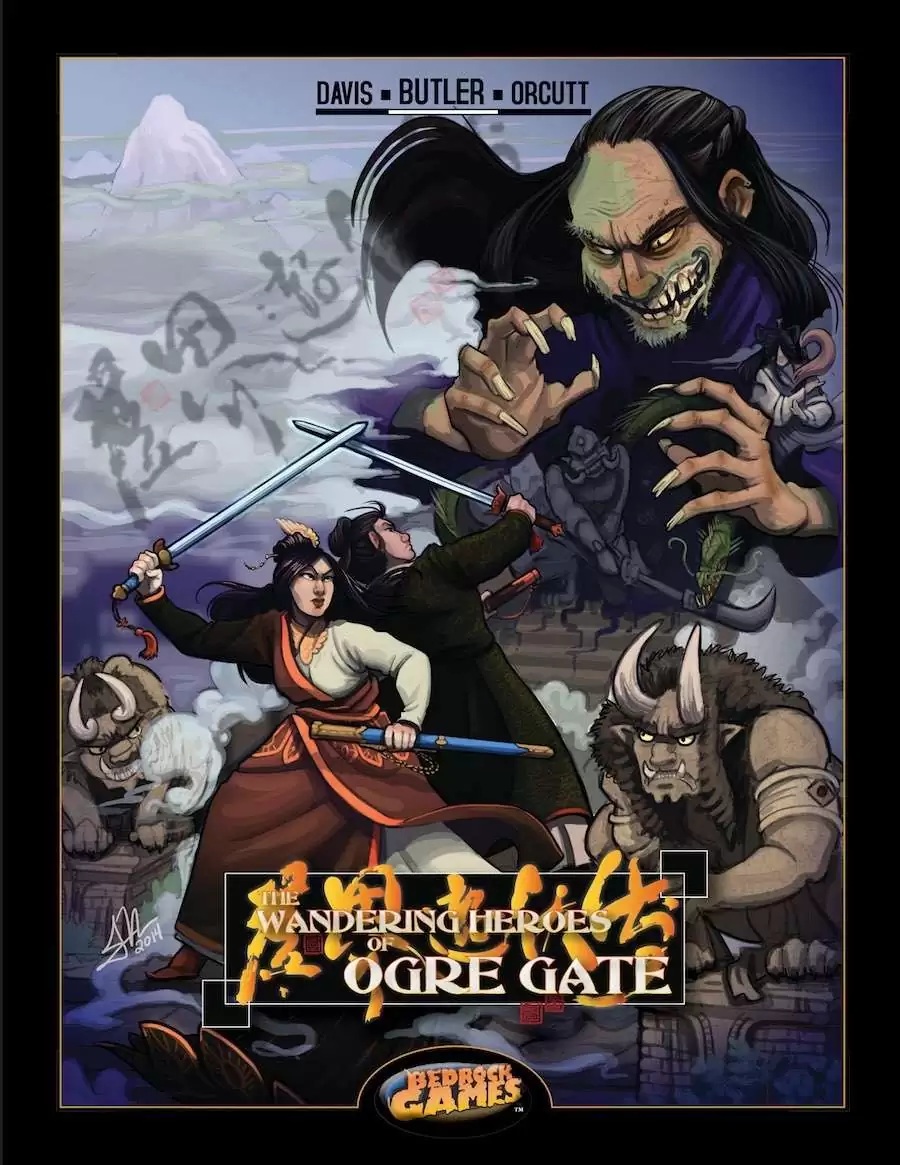
I interviewed Daniel, my cohost of the Tabletop Community Spotlight! Daniel created his own setting called Ithasen with an in-progress wuxia TTRPG system called Metanoia to go along with it. Ithasen has a spiritual force known as Ren that pervades the world. Ren is a magical manifestation of the user's, or Rennim's, will upon the universe. Rennim that cultivate their will grow stronger and capable of more amazing feats as the concentrate their power and force of personality.Within Ithasen there are seven lineages of people that decide what type of Ren they can use. Anamor use conversion Ren. Elkyr use flux Ren. Janim use elasticity Ren. Nyl use influence Ren. Okoi use recurrence Ren. Haqol use harmony Ren. Finally, Daruner use use coalescent ren. The two races lineages that drive unique politics in Ithasen are the Daruner and the Haqol.Daruner children absorb the Ren talents of both their parents, becoming a perfect blend of Daruner and another lineage parent. Through this mixing, a Daruner family could potentially include all other lineages within itself. This power has placed Daruner as the nobility of Ithasen.Haqol's power of harmony allows them to amplify the Ren powers of others. This puts Haqol in a vulnerable position as unscrupulous people will do anything to incorporate Haqol lineage into their bloodline. Haqol have experienced something akin to a genocide as their lineage has been consistently absorbed by other lineages and diluted over the centuries.There's a whole lot more than that so strap in!Daniel has a fully setup GitHub Wiki for information on Metanoia and Ithasen that you can explore.There's a Metanoid Discord server you can join to discuss the rules and setting with other fans.The occasional musing on TTRPGs can be found on Daniel's blog, Tabletop Discourse.GoCorral YouTube Channel for watching the Tabletop Community Spotlight.Vote in the CRIT Awards! Voting is open until August 23rd.Check out the Setting the Stage website!Want to be on the show? Fill out this survey.Join our Discord!Support Setting the Stage on Patreon! Hosted on Acast. See acast.com/privacy for more information.
  1. 86 – Wuxia Adventures in RPGS (Daniel and Metanoia/Ithasen)
  2. 85 – Medical Doctor D&D (Justin and Oops! All Healers!)
  3. 84 – Horseback Riding D&D Camp (Michael and SaddleSnaps)
  4. 83 – Call of Cthulhu's Garden (Hem and The Sprouting)
  5. 82 – Tarot Ghosts (George and Fears & Fortunes)