This should wrap up the dating of the After The Dragon War posts. Next up I’ll be plotting out what I want from the Dwarven Schism.

Previous: Cimmerian Timeline Part 19

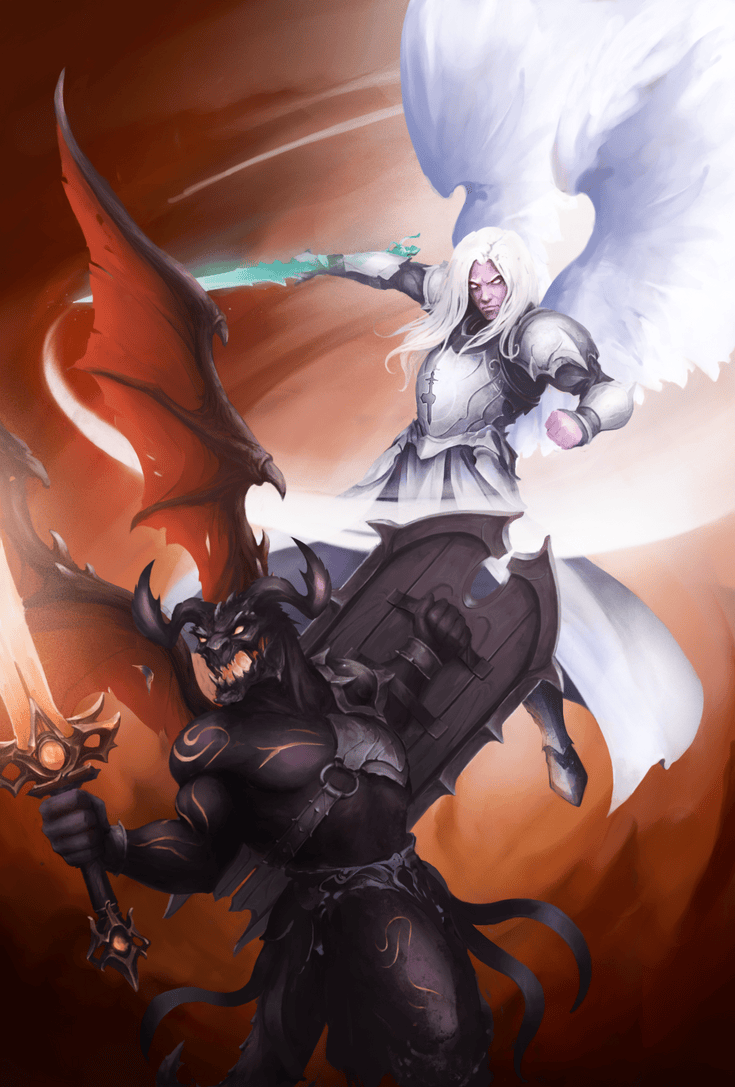
877BCE: Tentineh himself was responsible for constructing the defenses of five Dragon Orbs. He designed a floating superstructure to house the Orbs, but this massive construct would require more magical ability than Tentineh nor any of the other Heroes possessed. Tentineh began searching in the dark places of the world for the energy required to bring his vision to life.
Bigby retired to the woods of his childhood. He married and had children.

876BCE: Tentineh found a font of energy that he could use for his superstructure. He freed the Dahak from its ancient prison beneath the Greshen Volcano. In gratitude the Dahak promised to aid Tentineh in his endeavors. The two worked in concert to create a floating city. A gigantic edifice spanning for miles built on the upturned bottom of the Dahak’s volcano and four other lava-filled mountains.

875BCE: An enormous amount of power was required to keep Tentineh’s superstructure afloat. Tentineh began manufacturing over a dozen artifacts with untold powers. Upon completion he connected them to the volcano quintet. Additionally, the Dahak bound omnielementals to the volcanoes. A minor version of the elemental planes swirled and formed between the lava tubes.

863BCE: Tentineh placed the artifacts he’d created within his superstructure. He used the five Dragon Orbs entrusted to him to power the structure as well. Red, Green, Black, White, and Silver would power the city, one within each of the volcanoes.

862BCE: Still more power was needed for the superstructure so Tentineh ripped the raw life from the Greshen Valley and poured it into the floating city. This greedy act created Spheres of Annihilation throughout the Valley. These black holes roamed the land, erasing everything they touched.

861BCE: Tentineh’s superstructure was completed. He bequeathed the construction to the people of Greshen Valley. It would be a new home for them. A floating city that would protect, feed, and shelter Tentineh’s people for all time. In time this city would be known as Greshendale.
The grand wizard gave the leadership of this city to a council composed of his children and his apprentices. Tentineh would not rule the city. He prepared to enter eternal slumber.

-GoCorral

Next: Cimmerian Timeline Part 21

2 responses to “Cimmerian Timeline Part 20”

  1. Cimmerian Timeline Part 19 | GoCorral Avatar

    […] Next: Cimmerian Timeline Part 20 […]

  2. Cimmerian Timeline Part 21 | GoCorral Avatar

    […] Previous: Cimmerian Timeline Part 20 […]

Leave a comment

I’m Isaac

Welcome to the GoCorral website! I’m Isaac Shaker and this is a place for me to write about D&D and occasionally other topics. I host a podcast called Setting the Stage that interviews different DMs about their campaigns. I’m currently focused on completing the Cimmeria campaign setting and turning it into a book.

Setting the Stage Podcast

86 – Wuxia Adventures in RPGS (Daniel and Metanoia/Ithasen) Setting the Stage, Campaigns for D&D and Other RPGs

I interviewed Daniel, my cohost of the Tabletop Community Spotlight! Daniel created his own setting called Ithasen with an in-progress wuxia TTRPG system called Metanoia to go along with it. Ithasen has a spiritual force known as Ren that pervades the world. Ren is a magical manifestation of the user's, or Rennim's, will upon the universe. Rennim that cultivate their will grow stronger and capable of more amazing feats as the concentrate their power and force of personality.Within Ithasen there are seven lineages of people that decide what type of Ren they can use. Anamor use conversion Ren. Elkyr use flux Ren. Janim use elasticity Ren. Nyl use influence Ren. Okoi use recurrence Ren. Haqol use harmony Ren. Finally, Daruner use use coalescent ren. The two races lineages that drive unique politics in Ithasen are the Daruner and the Haqol.Daruner children absorb the Ren talents of both their parents, becoming a perfect blend of Daruner and another lineage parent. Through this mixing, a Daruner family could potentially include all other lineages within itself. This power has placed Daruner as the nobility of Ithasen.Haqol's power of harmony allows them to amplify the Ren powers of others. This puts Haqol in a vulnerable position as unscrupulous people will do anything to incorporate Haqol lineage into their bloodline. Haqol have experienced something akin to a genocide as their lineage has been consistently absorbed by other lineages and diluted over the centuries.There's a whole lot more than that so strap in!Daniel has a fully setup GitHub Wiki for information on Metanoia and Ithasen that you can explore.There's a Metanoid Discord server you can join to discuss the rules and setting with other fans.The occasional musing on TTRPGs can be found on Daniel's blog, Tabletop Discourse.GoCorral YouTube Channel for watching the Tabletop Community Spotlight.Vote in the CRIT Awards! Voting is open until August 23rd.Check out the Setting the Stage website!Want to be on the show? Fill out this survey.Join our Discord!Support Setting the Stage on Patreon! Hosted on Acast. See acast.com/privacy for more information.
  1. 86 – Wuxia Adventures in RPGS (Daniel and Metanoia/Ithasen)
  2. 85 – Medical Doctor D&D (Justin and Oops! All Healers!)
  3. 84 – Horseback Riding D&D Camp (Michael and SaddleSnaps)
  4. 83 – Call of Cthulhu's Garden (Hem and The Sprouting)
  5. 82 – Tarot Ghosts (George and Fears & Fortunes)