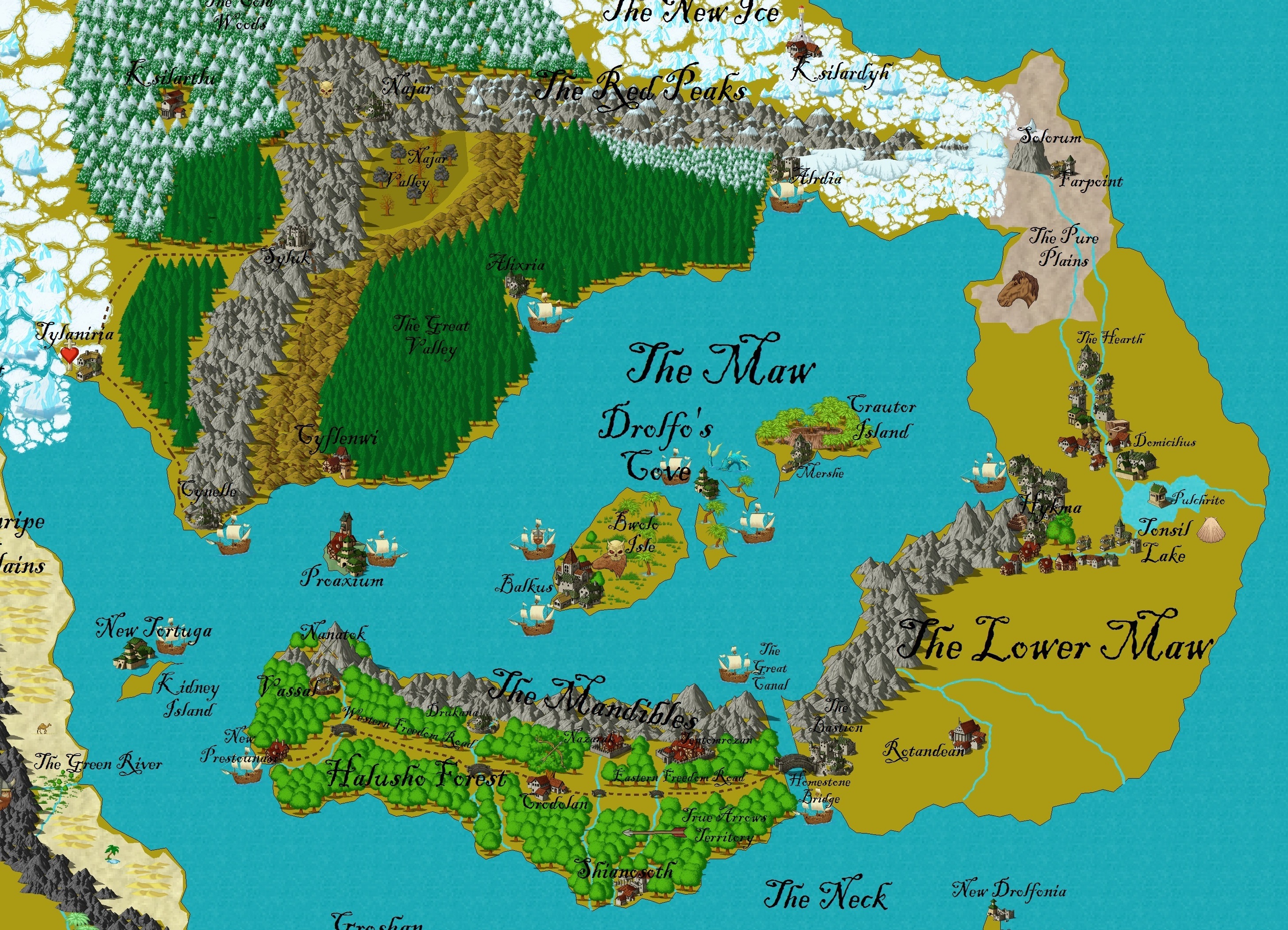
A section of Gurutama that covers the human territories along the Upper and Eastern portions of the Maw.

Previous: An Overview of Gurutama Part 3

I’ve described the merfolk and avians in Gurutama in broad strokes. I’d like to talk about the humans next.

The humans in Gurutama are similar to humans in the real world.

Gurutama humans originated in one area and spread out from there, just like humans originated in Africa on Earth and spread out from there.

There are now several different human nations in Gurutama. Today, I’ll focus on Najar, the first nation and the origin point of the human race in Gurutama.

When we started the Dawn of Worlds game we had an idea for four different races each embodying one of the four elements.

Merfolk are water and avians are air. Humans are fire and later I’ll talk about dwarves which are the earth in the quartet.

Humans in their early stages were rather primitive. They had a tribal structure within the northern forests and had little if any development towards typical civilized culture. I’d compare early Gurutama humans to the people living in Germany and France before the Romans got involved.

The humans did not slowly develop civilization in Gurutama, but were gifted it rapidly when the Najar Volcano erupted.

The eruption of the volcano scorched the Najar Valley below it, but it also signaled a great and terrible event.

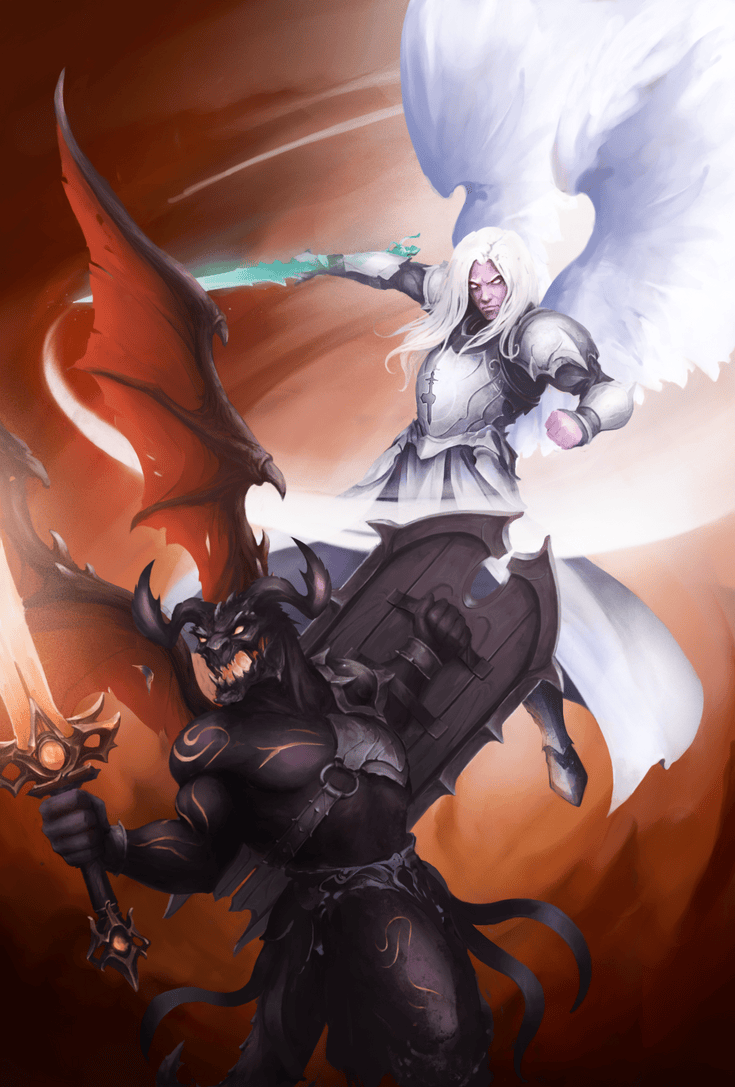
The demon prince, Navillus, came up out of hell through the volcano and began to influence the human people.

He named the Najar people as his mouthpiece and set them forth to rule all humans.

Most of the primitive humans converted willingly, but one tribe resisted.

Chieftan Bwolark Bwolo of the Bwarlor Skull-Dog Tribe fought against the demon worshipers.

The Skull-Dogs could not resist forever against the multitudes charged with the Black Prince’s power.

The Bwarlor people were forced to flee in boats for the islands in the Maw.

They set up colonies along the shore of the islands.

The merfolk living by the islands saw the islands as theirs, even if they did not inhabit them.

Conflict between the merfolk and the Bwarlor never escalated into war, but small skirmishes have taken place from the founding of the colonies on til today.

That’s probably enough information for one blog. There are still several more different human civilizations in Gurutama that I’ll describe in a later post.

-Mister Ed

Next: An Overview of Gurutama Part 5

2 responses to “An Overview of Gurutama Part 4”

  1. An Overview of Gurutama Part 3 | GoCorral Avatar

    […] An Overview of Gurutama Part 4 […]

  2. An Overview of Gurutama Part 5 | GoCorral Avatar

    […] An Overview of Gurutama Part 4 […]

Leave a comment

I’m Isaac

Welcome to the GoCorral website! I’m Isaac Shaker and this is a place for me to write about D&D and occasionally other topics. I host a podcast called Setting the Stage that interviews different DMs about their campaigns. I’m currently focused on completing the Cimmeria campaign setting and turning it into a book.

Setting the Stage Podcast

86 – Wuxia Adventures in RPGS (Daniel and Metanoia/Ithasen) Setting the Stage, Campaigns for D&D and Other RPGs

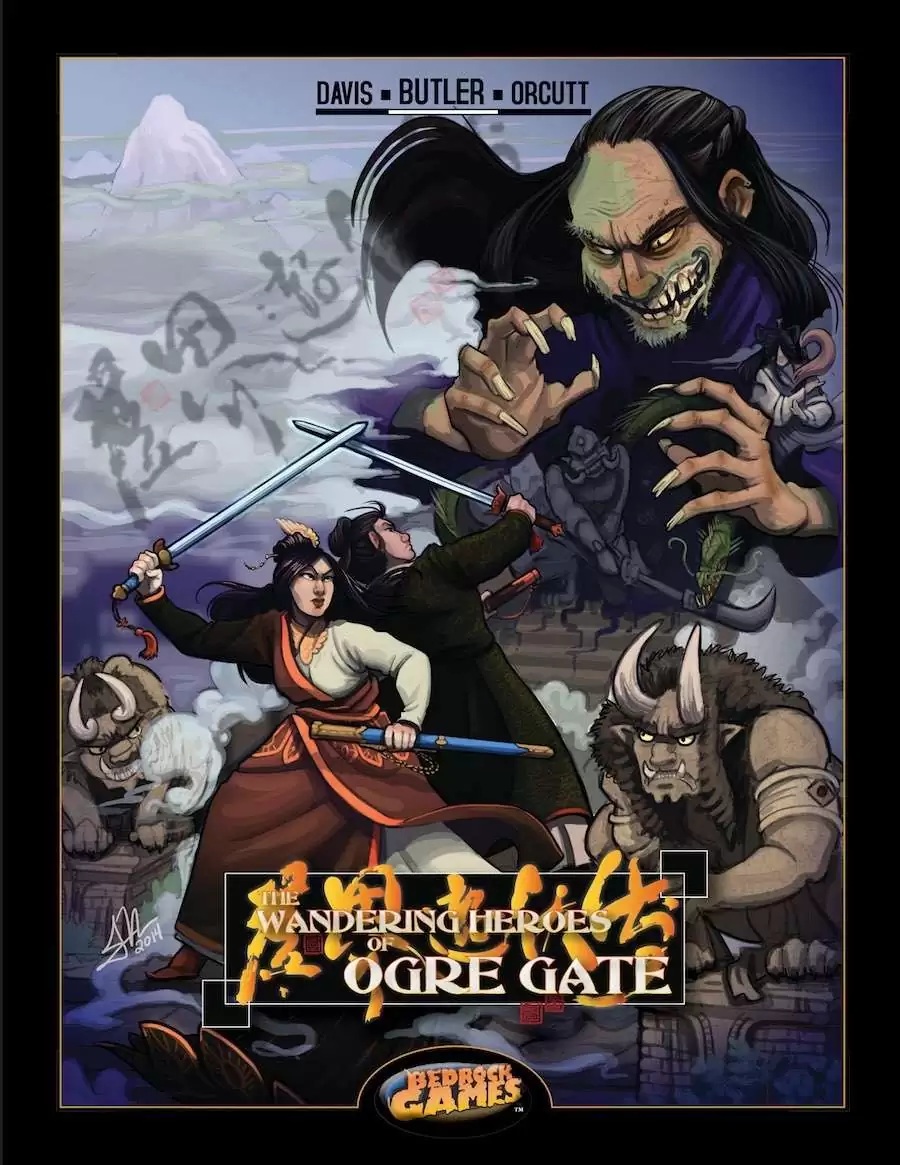
I interviewed Daniel, my cohost of the Tabletop Community Spotlight! Daniel created his own setting called Ithasen with an in-progress wuxia TTRPG system called Metanoia to go along with it. Ithasen has a spiritual force known as Ren that pervades the world. Ren is a magical manifestation of the user's, or Rennim's, will upon the universe. Rennim that cultivate their will grow stronger and capable of more amazing feats as the concentrate their power and force of personality.Within Ithasen there are seven lineages of people that decide what type of Ren they can use. Anamor use conversion Ren. Elkyr use flux Ren. Janim use elasticity Ren. Nyl use influence Ren. Okoi use recurrence Ren. Haqol use harmony Ren. Finally, Daruner use use coalescent ren. The two races lineages that drive unique politics in Ithasen are the Daruner and the Haqol.Daruner children absorb the Ren talents of both their parents, becoming a perfect blend of Daruner and another lineage parent. Through this mixing, a Daruner family could potentially include all other lineages within itself. This power has placed Daruner as the nobility of Ithasen.Haqol's power of harmony allows them to amplify the Ren powers of others. This puts Haqol in a vulnerable position as unscrupulous people will do anything to incorporate Haqol lineage into their bloodline. Haqol have experienced something akin to a genocide as their lineage has been consistently absorbed by other lineages and diluted over the centuries.There's a whole lot more than that so strap in!Daniel has a fully setup GitHub Wiki for information on Metanoia and Ithasen that you can explore.There's a Metanoid Discord server you can join to discuss the rules and setting with other fans.The occasional musing on TTRPGs can be found on Daniel's blog, Tabletop Discourse.GoCorral YouTube Channel for watching the Tabletop Community Spotlight.Vote in the CRIT Awards! Voting is open until August 23rd.Check out the Setting the Stage website!Want to be on the show? Fill out this survey.Join our Discord!Support Setting the Stage on Patreon! Hosted on Acast. See acast.com/privacy for more information.
  1. 86 – Wuxia Adventures in RPGS (Daniel and Metanoia/Ithasen)
  2. 85 – Medical Doctor D&D (Justin and Oops! All Healers!)
  3. 84 – Horseback Riding D&D Camp (Michael and SaddleSnaps)
  4. 83 – Call of Cthulhu's Garden (Hem and The Sprouting)
  5. 82 – Tarot Ghosts (George and Fears & Fortunes)