Previous: Cimmerian Timeline Part 52

Tying Nomingburg after the Dragon War to Tracy’s Return and then the eventual rise of Duke Jingo.

879BCE: With Tracy gone the people of Nomingburg began elections to choose their leader, the Duke of Nomingburg.

877BCE: Nomingburg became a home base for many of the rangers in the area.

870BCE: As Nomingburg grew the different survivalist guilds competed for new members. The original guilds of arcane, divine, ki, and technological power united against the newcomer Ranger Guild.

868BCE: Duke Triceta of Nomingburg from the Ki Guild enacted laws that restricted the activities of the Ranger Guild.

856BCE: Continuing restrictions on the Ranger Guild in Nomingburg finally resulted in the guild’s effective banishment from the city.

855BCE: Without the common enemy of the rangers to unite them the guilds of Nomingburg could no longer work together. A majority could not be reached and a new Duke was not elected.

853BCE: Failed elections continued to be held in Nomingburg. Any candidate that seemed close to gaining a majority found themselves assassinated. Each of the four guilds turned to regulating their own territory within the city.

844BCE: With Nomingburg elections still ineffective, the guilds began selling their services to people across the world. The guildmasters hoped the money and influence they gained abroad would help them to secure power at home.

818BCE: Tracy’s death did not dissuade Crafterton and Nomingburg. The two halfling cities continued to fight alongside the Gish Trio to cast out the remaining githyanki invaders. Nomingburg once more held successful elections to select the next Duke.

692BCE: Nomingburg rebuilt in the wake of Kruk-Ma-Kali’s invasion. The guilds reestablished themselves in their current forms, Assassins, Ninjas, Blackguards, and Blood Mages. Peaceful elections for Duke proceeded once again.

649BCE: After fifty years of peace, political assassination returned to the elections of Nomingburg. The leading candidate was murdered and the city descended into street to street warfare. A truce was declared, but Nomingburg was once again divided into four autonomous sections.

493BCE: The fighting between the guilds of Nomingburg resulted in citywide fire. All the guilds had to work together to put out the flames. Concerned that their fighting would result in their own deaths, the guilds began to seriously talk about peace. Unfortunately they continued to disagree on everything, even the conditions for meeting to have peace talks.

492BCE: The philanthropist, Jingo, was contacted by the four guilds of Nomingburg to resolve their differences. He tricked each of the guildmasters into meeting with each other without weapons. Diplomacy truly began. The guilds aligned behind Jingo as a leader for the unified city. He was declared Duke Jingo of Nomingburg.

Next: Cimmerian Timeline Part 54

2 responses to “Cimmerian Timeline Part 53”

  1. Cimmerian Timeline Part 52 | GoCorral Avatar

    […] Next: Cimmerian Timeline Part 53 […]

  2. Cimmerian Timeline Part 54 | GoCorral Avatar

    […] Previous: Cimmerian Timeline Part 53 […]

Leave a comment

I’m Isaac

Welcome to the GoCorral website! I’m Isaac Shaker and this is a place for me to write about D&D and occasionally other topics. I host a podcast called Setting the Stage that interviews different DMs about their campaigns. I’m currently focused on completing the Cimmeria campaign setting and turning it into a book.

Setting the Stage Podcast

86 – Wuxia Adventures in RPGS (Daniel and Metanoia/Ithasen) Setting the Stage, Campaigns for D&D and Other RPGs

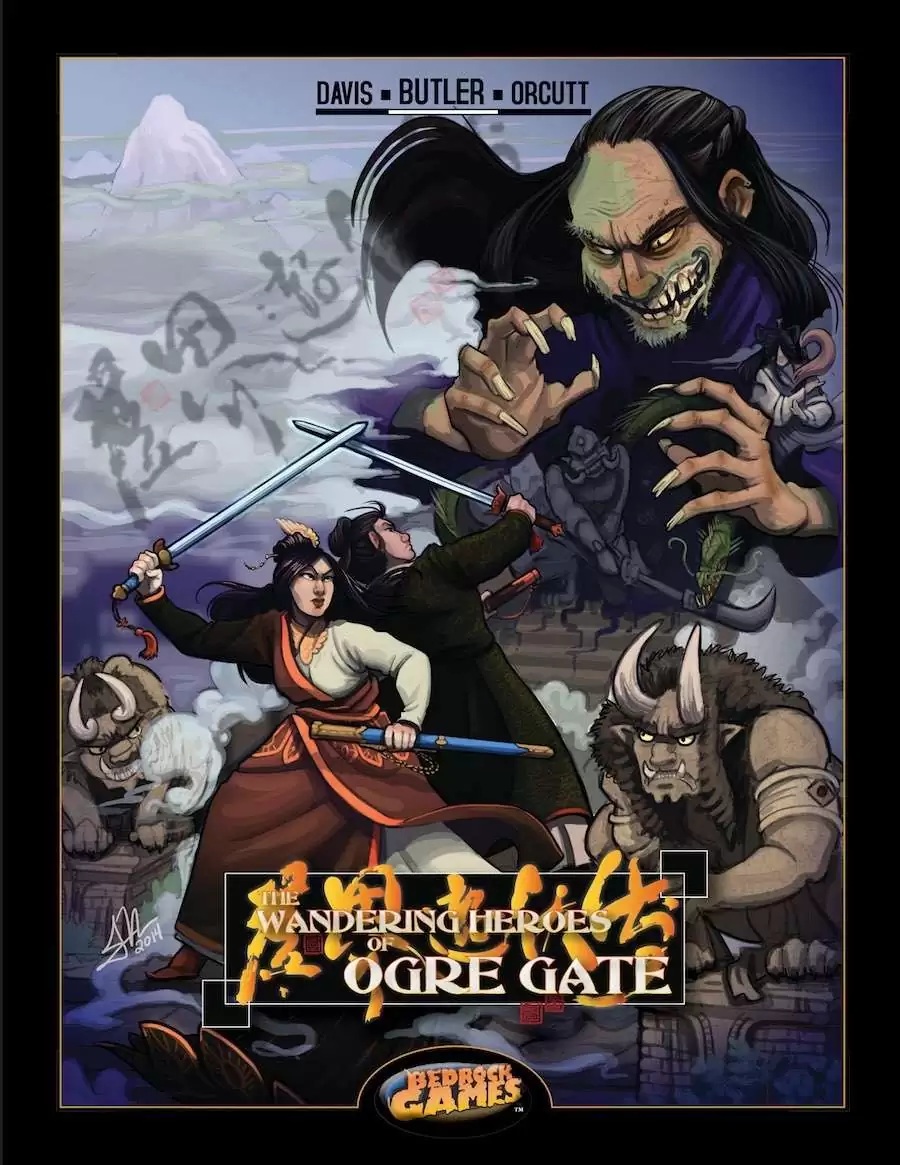
I interviewed Daniel, my cohost of the Tabletop Community Spotlight! Daniel created his own setting called Ithasen with an in-progress wuxia TTRPG system called Metanoia to go along with it. Ithasen has a spiritual force known as Ren that pervades the world. Ren is a magical manifestation of the user's, or Rennim's, will upon the universe. Rennim that cultivate their will grow stronger and capable of more amazing feats as the concentrate their power and force of personality.Within Ithasen there are seven lineages of people that decide what type of Ren they can use. Anamor use conversion Ren. Elkyr use flux Ren. Janim use elasticity Ren. Nyl use influence Ren. Okoi use recurrence Ren. Haqol use harmony Ren. Finally, Daruner use use coalescent ren. The two races lineages that drive unique politics in Ithasen are the Daruner and the Haqol.Daruner children absorb the Ren talents of both their parents, becoming a perfect blend of Daruner and another lineage parent. Through this mixing, a Daruner family could potentially include all other lineages within itself. This power has placed Daruner as the nobility of Ithasen.Haqol's power of harmony allows them to amplify the Ren powers of others. This puts Haqol in a vulnerable position as unscrupulous people will do anything to incorporate Haqol lineage into their bloodline. Haqol have experienced something akin to a genocide as their lineage has been consistently absorbed by other lineages and diluted over the centuries.There's a whole lot more than that so strap in!Daniel has a fully setup GitHub Wiki for information on Metanoia and Ithasen that you can explore.There's a Metanoid Discord server you can join to discuss the rules and setting with other fans.The occasional musing on TTRPGs can be found on Daniel's blog, Tabletop Discourse.GoCorral YouTube Channel for watching the Tabletop Community Spotlight.Vote in the CRIT Awards! Voting is open until August 23rd.Check out the Setting the Stage website!Want to be on the show? Fill out this survey.Join our Discord!Support Setting the Stage on Patreon! Hosted on Acast. See acast.com/privacy for more information.
  1. 86 – Wuxia Adventures in RPGS (Daniel and Metanoia/Ithasen)
  2. 85 – Medical Doctor D&D (Justin and Oops! All Healers!)
  3. 84 – Horseback Riding D&D Camp (Michael and SaddleSnaps)
  4. 83 – Call of Cthulhu's Garden (Hem and The Sprouting)
  5. 82 – Tarot Ghosts (George and Fears & Fortunes)