
At the merging of the Curving Stream and Delain Tribute lies Phoenix, once a city of over 120,000 people. Phoenix has always revolved around guilds. Every Phoenixian worth their salt belonged to one of the influential guilds of the city. Guilds were legally allowed to kill unlicensed professionals who fell under their jurisdiction if those individuals refuse a position within the guild. As a result, being blacklisted from a guild generally meant a move to a new city or a change in profession. Strangely, even the thieves of Phoenix had an official guild. In actuality, “thieves” kept the streets clean acting as a police force, assuming that a sum of protection money was paid to them.
Spellcasters had a special place in the guild system. Sorcerers and wizards registered with the Mage’s Guild in order to be able to cast spells legally, but clerics, even those of the Titans, could cast freely. Because full members of the Mage’s Guild were required to create a certain number of magical items for sale every year, Phoenix had a booming trade in magical items. Arcane scrolls, potions, and magical items could generally be bought in Phoenix for as much as 10% below market price.
The Thief’s Guild oversaw the day to day business of the city and, with the assistance of the clerics, arbitrated any disputes between the guilds. The laws of the city fluctuated based on what guild a person belonged to. Non-guild members in the city fell under the Thief’s Guild jurisdiction leading to a high pickpocket rate in Phoenix for people without guild membership.
There was an Adventurer’s Guild in Phoenix. The members were simple individuals for the most part who hired themselves out to the highest bidder. Groups of six or more adventurers could be hired for contracts, although prices were steep. There was a ill-defined barrier between the Mercenary’s Guild and the Adventurer’s Guild as to the proper jurisdictions of each. This disagreement sparked street-fighting in the past and could’ve led to a civil war if external threats didn’t unite the guilds.
During the Second Alliance War Phoenix became a point of contention for the Xorians and the Alliance. The Xorians besieged the city for two years and devastated the countryside in the process. Eventually the city was taken by a dragovinian assault with heavy losses on both sides. The Adventurer’s Guild was wiped out. Many of the mercenaries fought on to the last while the guild leaders of Phoenix escaped. Those who surrendered were given the choice of turning to dragovinians. Many accepted this offer. The two headmasters of the Mercenary’s Guild, Gradorian and Junai, escaped.
The Mage’s Guild and the rights of clergy were upset by the Xorian takeover of Phoenix. All resident clerics of the Olympian pantheon were given a choice, convert to Dragoviniysm or face execution. Most of the clerics chose to die rather than betray their gods. The members of the Mage’s Guild were given a similar choice, but they accepted. The majority of the mage journeymen were turned into dragovinians to become the new elite of Phoenix.
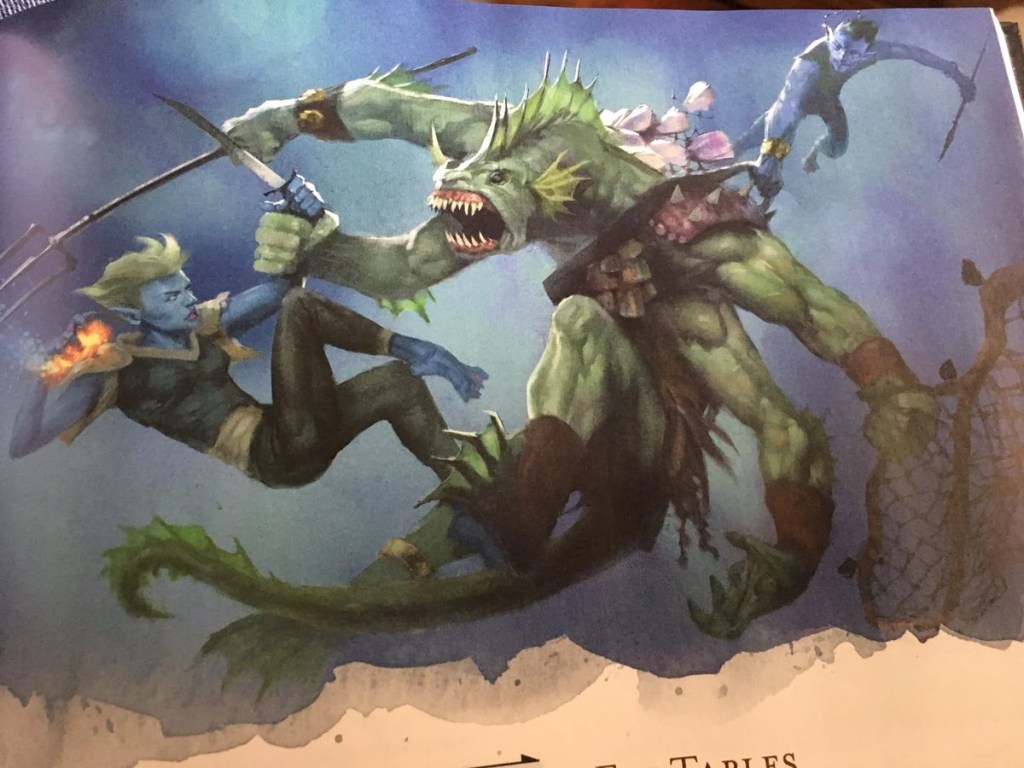
The dragovinian hierarchy didn’t last long. A few months after Xorians conquered the city a new force attacked. Poseidon‘s combined forces entered the Second Alliance War with a two-pronged attack against the Xorian Kingdom and the Second Alliance. The attack against Bradel Fields failed, but the invasion of Phoenix succeeded. The city was flooded and occupied by merfolk and other aquatic races. The dragovinian and Xorian defenders died or abandoned the city.
Phoenix remains a water-logged shadow of its former glory. All but the tallest buildings are submerged in a massive lake formed by Poseidon’s magic. Most of the original inhabitants of Phoenix perished in the Battle of Phoenix, the cruel occupation by the Xorians, and the sea god’s flood. Those that remain are spread throughout Cimmeria with larger concentrations in Jipangu and Mo’nyoq.




 GoCorral