
Subraces
Outsiders are a multitude of physical and spiritual forms. All have a measure of magical power and a connection to their native planes outside the world of mortals. Angels are creatures of good opposite to demons which are creatures of evil. Beings of law uphold divine law when no one else will. Elementals exist as primal forces of nature. Each of these subraces can also breed with mortals forming crosses known as planetouched.
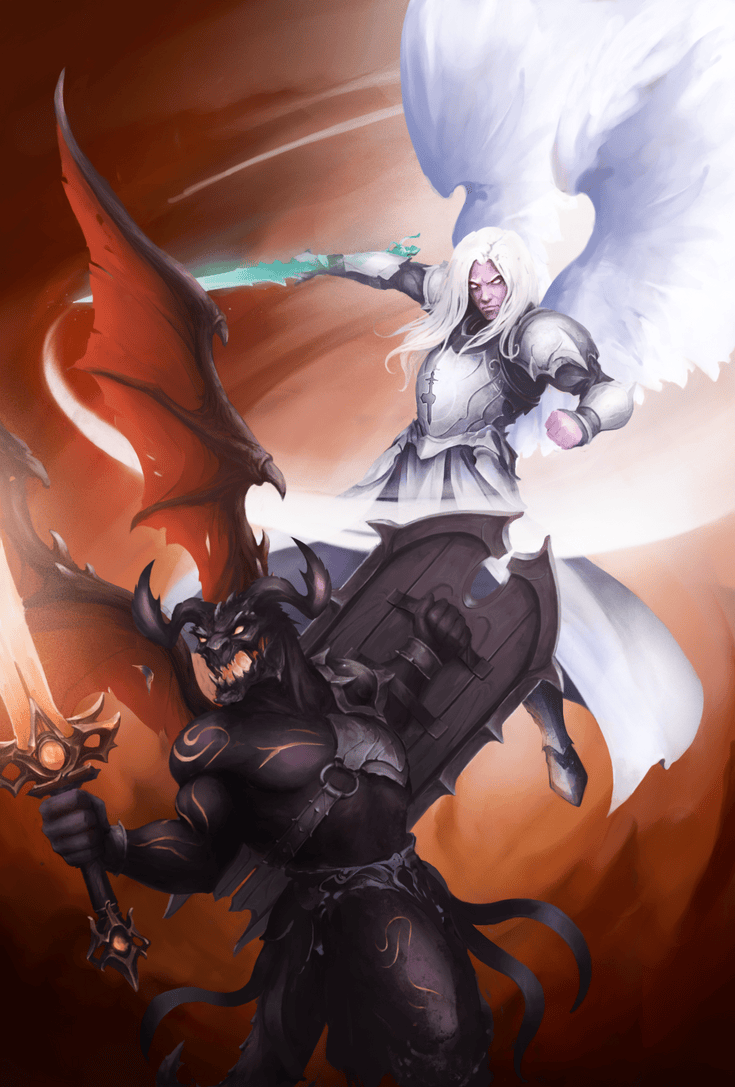
Angels: Angels are all humanoid in shape with wings coming out of their backs. Some angels have animalistic features for their heads or extremities, but still maintain an upright posture. They possess magical powers related to healing, blessing, and seeing through deceptions. Angels are also ferocious fighters when provoked. Nike, Dike, and Bia lead the angelic hordes with the furies being the vanguard of angel justice in the mortal world. Angels of all sorts can come down from their home on Mount Olympus to render aid to mortals.
Angelic planetouched are known as aasimars. They possess silver, golden, and purple features, reflecting their divine ancestry. Aasimars tend to be slightly taller, stronger, and smarter than others of their mortal race. Along with these physical features aasimars have magical abilities related to light and healing.
Angels within Cimmeria include the common D&D creatures of angels and archons.
Demons: Demons are often humanoid in shape, but they come in a variety of forms. They are always blended with some sort of animal or object that reflects the type of sin they enjoy. A lustful demon might look goat-like in appearance while a greedy demon might be composed of golden coins. They possess magical powers related to pain, disease, lies, and desecration. Demons live in the Underworld, primarily in Tartarus where they punish wicked mortals in the afterlife. Some demons live in Erebos as well, but as guards preventing the dead from escaping.
Demonic planetouched are known as tieflings. They possess red or black features, with striking eyes due to the color extending into the cornea. Tieflings have horns growing from their head and some also have forked tails. Tieflings are stronger and smarter than others of their race, but in civilized parts of Cimmeria they are looked at with fear and disgust for their tainted parentage. Their demonic ancestry also manifests with magical powers related to darkness and deception.
Demons within Cimmeria include the common D&D creatures of demons, devils, slaads, and yugoloths.
Elementals: Elementals are the primordial forces of nature that break off from their respective natural forces. The most common elementals are composed of air, earth, fire and water, but others such as ice, lava, metal, and wood are known to appear. Their physical forms are mutable, but always with the outer shell of their forms reflecting the element they are composed of. These creatures are able to control their element in the environment in a manner similar to telekinesis. As they grow in age, they also grow in size and magical power.
Some of the most powerful elementals adopt a permanent humanoid form. These creatures are known as genies. Their physical form matches their element, but with less intensity. Rather than being composed of fire, a fire genie is red in color with an intense heat coming off it. A wood genie would be brown or green in color with leaves for hair. Each genie has fantastic control over their element. They are able to summon the element out of thin air and weave it into magical objects. Their powers are sought after by mortals of all kinds, resulting in some genies becoming imprisoned to serve their mortal captors.
Most common elementals cannot produce offspring with mortals due to their physical nature. However, genies are capable of breeding with other mortals. Their children are known as genasi. Genasi reflect the power of their genie ancestor, having similar coloration and physical features blended with their mortal race. Genasi also inherit a portion of their genie parent’s magical power, but on a much weaker level. Their spells are minor, serving more as tools than weapons in combat.
Beings of Law: Beings of law come in various shapes based on the laws they enforce. All beings of law possess a vision of what an ordered society should look like, however these visions are not aligned. Different types of beings of law have different visions of what the world should be.
The most famous beings of law are the inevitables that enforce divine laws. Inevitables are elegant metallic constructs in the forms of various mortal races. Inevitables have magical powers related to finding criminals and punishing them. Mortals have their laws, but the gods have also set forth their own list of crimes that must be published. Mortals are expected to enforce the divine laws, but when they do not, inevitables are called in to do what must be done.
The next most common being of law are the formians. They are large ant-like beings with a carapace-covered humanoid upper body attached to their thorax instead of just a head. The formians live in giant ant hives led by a queen. Each queen rules her hive with absolute authority through telepathy and mind control. Formians seek to make the rest of the world as ordered as their hives using the queen’s magic. Mortals that formians encounter are kidnapped, brainwashed, and forced to labor in their underground hives just as the worker ants do. Formian hives exist throughout Cimmeria, but there is a notable concentration in the Shacklack Desert.
Rakshasas are another being of law known to act in Cimmeria. Rakshasas impose order on the cyclical nature of reality. Parents are replaced by their children, seasons progress in order every year, and the moon changes its phases over and over again. These cycles are overseen by the monstrous god, the Dahak. Most rakshasas serve the Dahak and restart these cycles when they are disrupted. A few rakshasas enforce order by preventing cycles from repeating. An everturning wheel is one type of order but a static wheel is another. When rakshasas are not engaging with cycles they are ruthless sociopaths, hoarding wealth and luxuries for themselves with no concern for the morality of their actions.
Beings of law do not have planetouched children with other races. Of the beings of law only rakshasas sire children, but their seed breeds true. All children of a rakshasa are also rakshasas, regardless of the race the rakshasa mated with.



Leave a comment