Physical Description
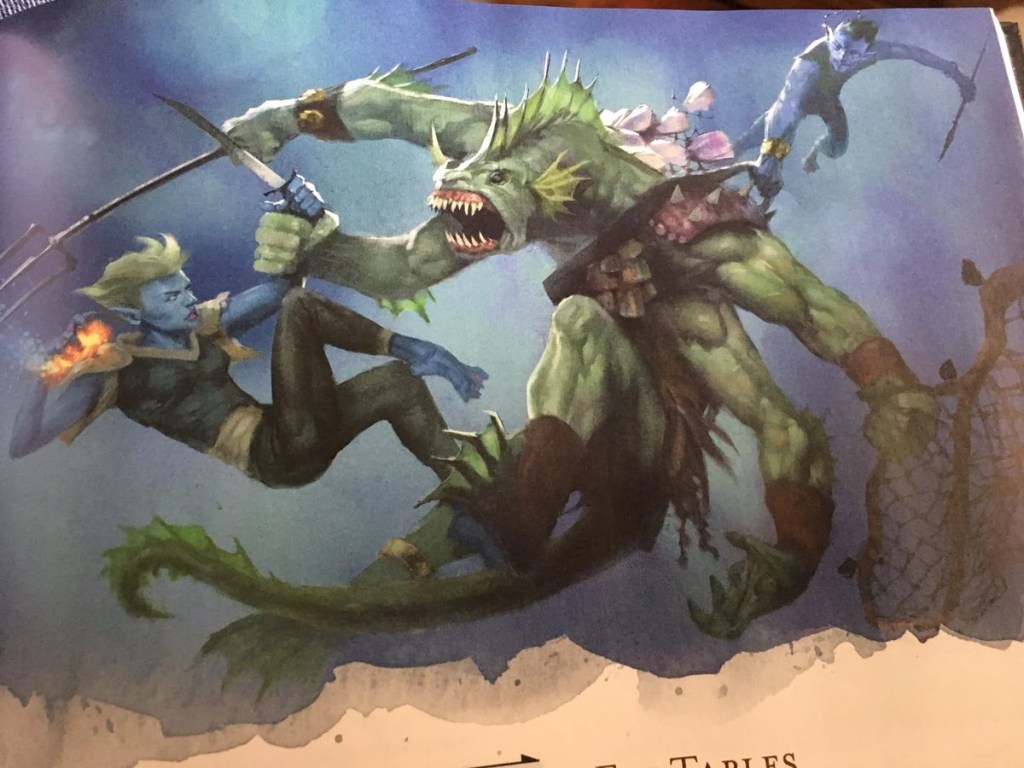
The water races of Cimmeria live within the Caspian and Aral Seas. They are generally humanoid in shape with most subraces having a head, torso, two arms, and two legs. Their bodies are adapted to the water, sporting gills, webbed toes and webbed hands for improved swimming. Many water races have dorsal fins and tails to assist with movement through the water. While some water races have lungs for breathing above water, many do not. Those without are able to hold their watery breath for several minutes on land.
Some water races live in the deep waters of the Caspian far below where the sun penetrates. The deep waters are a dark place, thus the water races have developed darkvision to see at those depths. Additionally, water races that live on the sea floor of the Caspian have thick skins to resist the increased water pressure at that depth.
Culture
Despite being wildly different in form and temperament, the water races share a cultural foundation shaped by life beneath the sea. Their societies are adapted to the dangers and bounties of the ocean. Vicious sea monsters still lurk in the depths and the water races look to the gods for protection. All water races pay homage to the many gods of the sea whose space they occupy. Rituals revolve around tides, storms, and migrations.
Water race culture revolves around interdependence with the ocean’s resources. Hunting, gathering, and crafting are shaped by the availability of coral, kelp, cavern stone, and the many creatures they coexist with or prey upon. Tools and ornamentation often incorporate shells, bone, and bioluminescent materials, giving water race craftsmanship a distinctive glow in the dark waters. Some societies, like the merfolk, maintain trade and diplomacy with surface dwellers. More insular or aggressive groups rely on raiding, territorial control, or survivalist nomadism.
Social structure among the water races is varied but linked by a shared understanding of power as fluid and situational. Leadership may be based on age, wisdom, ferocity, or mystical insight, but it must always respond to the shifting demands of the ocean environment. The stoic councils of triton cities, the egalitarian bands of merfolk, the predatory hierarchies of sahuagin war-clans, and the chaotic priesthoods of locathah all reflect ways of adapting to the pressures of the deep. Even scrags follow an order of strength, however brutal. Despite differing values, water race cultures respect strength of purpose whether expressed as martial skill, survival insight, or mystical fervor.
Perhaps the greatest unifying feature of water race culture is their relationship with stories. Oral tradition dominates underwater life as writing with ink and parchment is impossible underwater. Tales are told through song, dance, or ritualistic reenactments. Legends speak of lost cities claimed by the deep, heroic defenders of the trenches, monstrous beings from the abyss, and the delicate balance between the surface world and the ocean below. These stories bind the different water races together, reminding them that while their forms and values differ, they all belong to the vast, living world beneath the waves.



Leave a Reply