Death is a status condition in Dungeons and Dragons.
What does death do in D&D? It prevents your character from taking actions. Similar to other conditions like paralyzed or stunned.
If your character dies in D&D, revival is just a spell away. The 3rd level revivify spell brings a dead character back to life immediately with nary a consequence. If your character gets paralyzed in D&D, you need a 4th level freedom of movement spell to escape the condition. Death is actually easier to circumvent than paralysis!
Death as a status condition becomes far clearer at higher levels in D&D. Encounter balance becomes exceedingly difficult for PCs that are at level 10 or higher. The solution I came up with as a DM was to stop caring about encounter balance. Death is so meaningless when resurrection magic is around that the only thing I needed to be careful about was a Total Party Kill. But killing one or two PCs in a fight? That’s just part of the job.
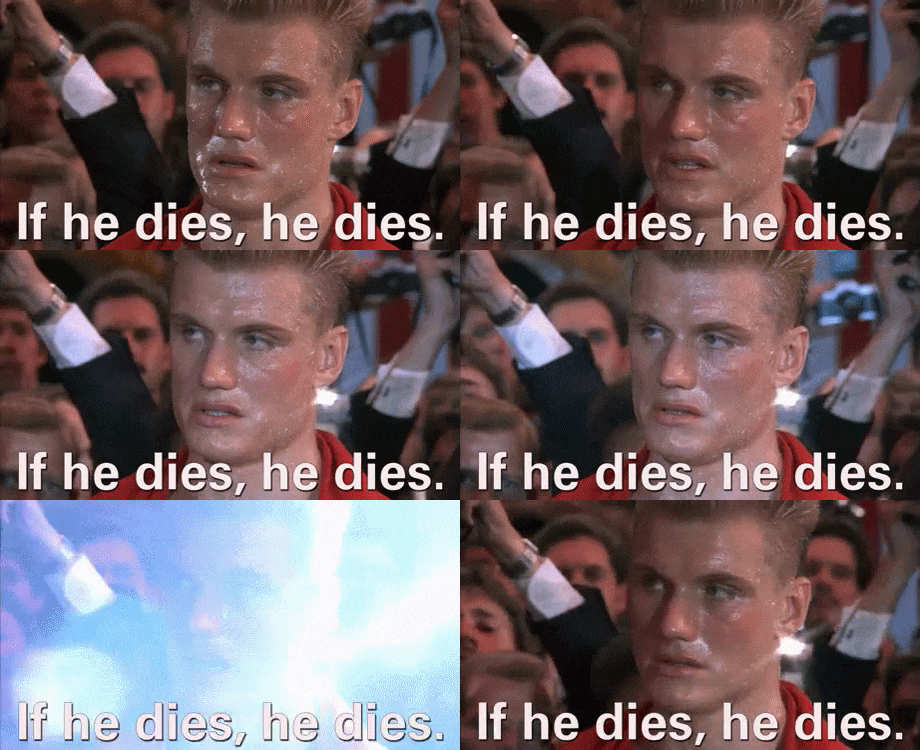
I know some DMs take the approach that you should always be threatening death for players, even at lower levels. I understand the mindset for that, but that’s not a fun setup for my group. When death is a meaningful consequence in a game, it’s devastating to lose a character.
I remember when my first character died, I wasn’t really aware of resurrection magic. I took a break from the game and went in the backyard to throw a baseball at a target for half an hour while the rest of the party finished the encounter. My character got raised back to life and we moved on, but it wasn’t a fun experience. It felt more like I’d been cheated out of a good time.
Since I knew how much it hurt, when someone else’s character died later on in that campaign, I immediately started resurrecting them. Revivify wasn’t a spell back then, so this was just the old-fashioned raise dead magic with a one minute casting time. I sat out of combat, casting the spell for ten rounds. The rest of the party rallied around my character to protect him. And we brought the other character back to life mid combat. It felt incredible!
So I like bringing people back to life in D&D, but you have to recognize that death is impermanent to appreciate it.
Few other TTRPGs approach death in the same way. D&D adjacent games like Pathfinder and Paladin share a similar style and philosophy towards death’spermanence. But most games portray death as the final end that it is in real life.
There’s a different feeling in many other TTRPGs. Death can be the end for your character, but it can be an appropriate end. Fighting and dying for what you believe in is a concept honored across the ages. Why not honor it in the fiction of our game nights? But we don’t have to. Video games are fun too, where death is just a speed bump to a good time.



Leave a Reply