D&D tracks your character’s progress using levels. Anyone who’s played an RPG is familiar with systems like this.
You defeat monsters and other challenges. Your character gains experience, learns new skills, gets new equipment, and becomes stronger. Nearly every game in existence focuses on this basic principle.
A gross overgeneralization is that “numbers go up.” RPGs have numbers describing actions under everything and as you level up, all your numbers go up.
The number of hits you can take goes up, your sword skill goes up, your speed goes up, your flower arranging ability goes up, EVERYTHING GOES UP!
But that “EVERYTHING” also includes the enemies you face.
So when you go from level 1 to level 2 you are now facing hobgoblins instead of goblins. Hogoblins are, of course, exactly like goblins except they have bigger numbers to match your bigger numbers.
Why? Well, because gripping conflicts drive the narrative of the game and because EVERYTHING GOES UP!
But if your numbers go up and the enemies numbers go up… what has really changed? Can you really say that your character is stronger than they were before if all the threats they face are still just as challenging?
Different RPG systems have different answers to this problem, but D&D answers the problem with what I and a few others have dubbed, “the tiers of play.”
There are four basic tiers of play in the 3.5 edition of D&D that I play, low, middle, high, and epic.
The low tier consists of levels 1-6. At the low tier your character is developing the skills and powers of normal heroes (check out this ancient ten year old blog post for a description of why level 5 is about the limit of a normal human’s power).
The low tier is popular because the fear of death is still quite real. One stray hit and everything could be over. The risk! The excitement! The danger to your imagined self!
People love the low tier so much that there’s even a variant of D&D called E6 that restricts play to that level.
The mid tier consists of levels 6-11. Something very important happens at level 6, one new tool that makes a HUGE difference in what a party of adventurers can face.
That one single thing is the spell, fireball.
Let’s give a little context to explain why fireball is so important.
D&D is a medieval fantasy roleplaying game. That means that everyone’s wearing armor, using magic, and swinging swords.
Guns haven’t been invented yet. Long range weapons are bows, slings, or thrown rocks. Spears are the weapon of choice for the average person.
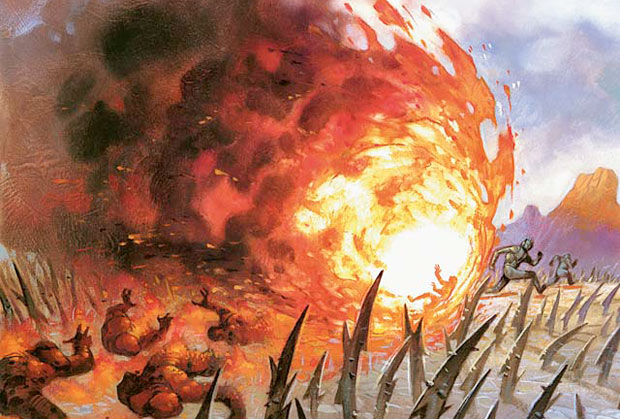
The fireball spell is effectively an incendiary grenade.
You can imagine how something like that would revolutionize medieval warfare. Well, it does the exact same thing to D&D.
Low tier monsters still pose a minor threat to a party, that is until the party gets fireball.
Then, that group of a dozen low tier monsters can be roasted in an instant by a magical grenade thrown by a wizard PC.
Other significant abilities are unlocked at the mid tier. Teleportation magic becomes accessible, allowing the party to instantly pop from place to place without a care in the world.
Weightless bags that can hold a literal ton of treasure become common place, a trained swordmaster can kill four men in the space of as many seconds, players can jump the Grand Canyon and even fly!
All sorts of barriers begin breaking down in the mid tier because the normal constraints of reality don’t really apply. The gritty dangerous world of the low tier is left behind as the tall tales of the mid tier begin.
The high tier consists of levels 11-16. At this point, the PCs are some of, if not the MOST, important people in the world.
Power skyrockets to the point that entire cities must respect a PC or face the consequences.
At the mid tier, a clever party can outsmart and outwit a small army.
At the high tier, a single PC can overpower a small army all on their own.
Nations become defined by what high level entities are protecting them or controlling them. Kind of like superhero comics.
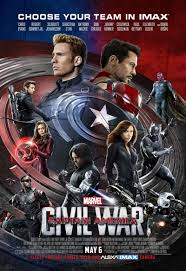
Captain America: Civil War is actually a fairly good example of this problem. Without oversight, what’s to really stop a team of superheroes from ruling the world?
The epic tier consists of levels 17 and beyond.
Technically epic levels begin in D&D at 21st level, but that’s an actual distinction in the games rules. The tier of play changes at 17th level, not 21st.
Why 17th level? Because that’s when the spells, wish and miracle are unlocked.
Wish and miracle do literally anything.
The invading army is approaching? I wish they were on the moon.
Our army was wiped out in a surprise attack? I pray for and receive the miracle that everyone is alive again.
There are some limitations on these spells, but the limitations aren’t really significant. You can pretty much dictate an effect and get what you want. And at 21st level this problem becomes even worse. The PCs essentially become gods.
Finding enemies to fight characters that are this strong is a challenge all its own and maybe I’ll write a blog post on that at a later date.
For now, I feel like I’ve covered the tiers of play with broadstrokes.
If you play D&D and have any thoughts on what I’ve set forth here, feel free to let me know in the comments below!
-GoCorral


 GoCorral
Leave a reply to D&D: The Tiers of Play for DMs | GoCorral Cancel reply