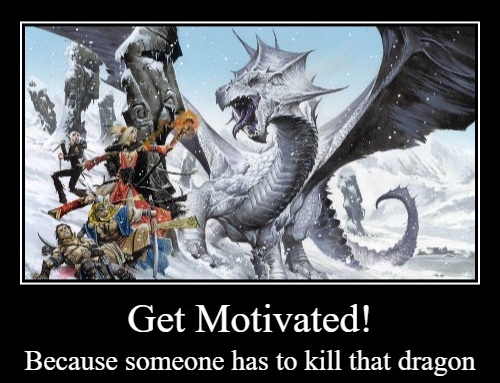
Different players have different reasons they play RPGs and you can adjust your RPG sessions for the different player motivation types of Actor, Explorer, Instigator, Power Gamer, Slayer, Storyteller, Thinker, and Watcher!
I wrote this from my experience with my own group over 25 years. I originally wrote a post going through each person in my group to detail how I approached their different motivation types. I realized my advice would be more helpful if it was organized by motivation type instead of by the names of my players.
While I only have five players that I wrote about, each of them fits two or three of the player motivation types. That’s why I’ve got more than five entries here. Even within the different motivation types, I use different strategies for different people. This hopefully demonstrates that the motivation types are not a monolith that perfectly describes player behavior with an exact recipe on how to run a game. People are complicated and social interaction always requires adaption and nuance specific to each person.
The five players of my group are:
Avery: Actor and Slayer
Ben: Instigator, Power Gamer, and Thinker
Jamie: Power Gamer, Storyteller, and Thinker
Trajan: Actor and Storyteller
Will: Actor, Thinker, and Watcher
With that out of the way, I hope these are helpful to you as a GM trying to improve your game or as a player trying to realize what you want out of RPGs!
How to GM for Actor Players
Avery doesn’t need much to have fun as an Actor type. He likes playing interesting characters in scenes that focus on other characters. Those opportunities naturally occur in any campaign that isn’t just a dungeon delve.
Trajan is a good communicator and will tell me what he wants as an Actor type. His proactive communication also prevents him from overshadowing other players. I don’t need to do much to satisfy him on this front either.
Will’s Actor motivation enjoys complex moral choices. Presenting those is fun for me as well, so I naturally do that as a GM. I enjoy campaigns with lots of moving parts for the plot. I create stories that move forward with or without the PCs. Its up to them how they change that plot.
How to GM for Instigator Players
Ben is the Instigator of my group. This part of his motivation came from being an infrequent attendee of our sessions. I do my best to alter the flow of different events in the campaign so that Ben can be present for the higher energy scenes that he enjoys. The lower energy scenes occur during sessions that he can’t attend.
How to GM for Power Gamer Players
I’ve got two Power Gamers in my group and they both like pretty much the same thing. I give them difficult problems to solve with hard combats, social entanglements, or dungeons with lots of traps and puzzles. These encounters are a mix of normal, perfectly made to counter their Power Gamer character build, and perfectly made to be exploited by their Power Gamer character build. With that variety, the Power Gamers have opportunities to shine and rely on the others in the party as part of their overall strategy.
How to GM for Slayer Players
Avery is the Slayer of my group. I make sure there’s at least one threatening combat encounter in every adventure to satisfy this motivation type. I don’t make that combat encounter the central focus of my adventures because the rest of my players don’t like that.
How to GM for Storyteller Players
I’ve got two Storytellers in my group. One of them is proactive about guiding the story with his character. Involving him in the development is easy since there’s open communication about what he wants. My other Storyteller player enjoys plot twists the most. Writing plot twists, having overly dramatic encounters, and using character voices have been my best tools for him.
How to GM for Thinker Players
I’ve got three Thinkers in my group. I approach their motivation type in pretty much the same way. When writing an adventure I design a situation without an obvious solution. There’s lots of different parts that the group will have to assess and decide where they fit. No obvious solution means the party can think up their own.
Avoiding simple plots means my adventures are rarely just dungeon crawls. There might be a simple dungeon crawl, but what the party does with the MacGuffin at the end is up to them. Will they give the crown to the prince, the princess, or the democratic representative of the people? It’s up to my players and their decision process.
How to GM for Watcher Players
Will is a bit of a Watcher type. There isn’t really a secret to keeping the Watcher satisfied. Don’t purposefully give them the spotlight if they don’t want it. I think the best thing I do to “satisfy” Will’s Watcher type is to hang out with him outside of RPG sessions. We play Age of Empires and Crusader Kings together. We go to the movies or talk about Magic cards (don’t play that often anymore). The others are invited to these events as well, of course. Overall, I think these hangouts have done more for satisfying Will’s Watcher type than anything in our RPG session. Varying what you play and do together is really the key for Watch motivation types.
Missing Explorer
My analysis of my players determined that none of them were Explorer types. Maybe they are and my campaigns and GMing style are just bad at satisfying that motivation type? Either way, I unfortunately don’t have much personal experience with this player motivation type.
Conclusion
I hope these small pieces of advice are useful to you. If you’ve got your own ways that you approach the different motivation types in your campaigns, let me know in the comments. Especially that Explorer type!



Leave a Reply