Location
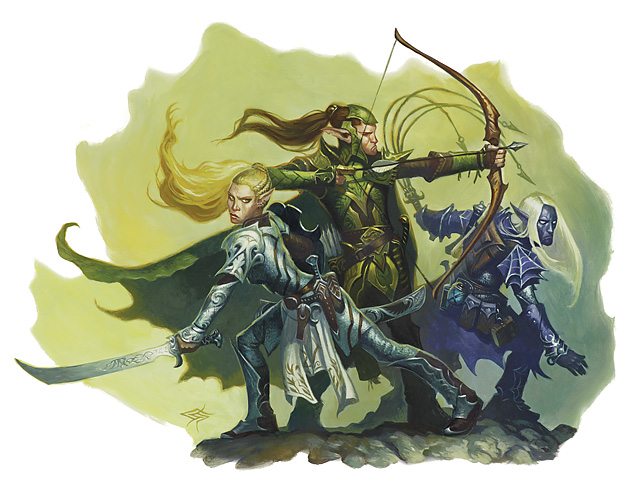
Elves exist within human cities and within the forests of Cimmeria. High Elves live mostly in Valor’s Forest. Wood Elves live mostly within Bigby’s Forest. Wild Elves live mostly within Robber’s Forest. Dark Elves live in the forests of Xoria and in the Underdark. There are also groups of different subraces of elves living on the Elf Isle in the Caspian Sea. The Elf Isle is hostile to foreigners and there is no record of peaceful contact with the elves there in centuries.
Relations with Other Races
Elves often have strained relationships with the other races of Cimmeria. They are hostile to many races entering their forests. Honored guests are allowed within but must strictly obey the rules of hospitality or risk expulsion. Humans have set up trading posts outside elven forests for the sylvan people to exchange their goods with those of the outside world. Elves see humans and halflings as young children needing guidance and protection, but elven communities are often unwilling to provide either to outsiders. There is a natural respect for dwarven craftsmanship among the elves, but the rest of dwarven culture is viewed as alien and strange. Elves are hostile to orcs due to orkin participation in Kruk-Ma-Kali’s sack of Valor’s Forest. Ultimately, while elves navigate complex interactions with other races, their enduring commitment to preserving their own way of life often overshadows any potential for deeper alliances or understanding.
Common Deities
Elves connection to the natural world leads them to favor Artemis, Demeter, and Pan as their deities. Those with aggressive personalities typically choose Artemis while those who are not passively inclined will worship Demeter. Pan has a small cult following for those who primarily worship him. Outside of the cult the satyr god is respected as a powerful spirit and receives small daily sacrifices in most elven homes. Elves love of magic also leads them to worship Athena and Hecate. Elvish spellcasters bury a nut or seed in sacrifice to one of these two goddesses before they memorize their spells each day.
Place in Adventuring
Elves make excellent wizard, ranger, and rogue adventurers due to their unique traits and inherent qualities that align well with these roles. The longevity of elves allow them to master the most difficult arcane arts. In addition, each of the elven subraces has a unique talent for magic that allows them to explore spells from a young age. Elves make excellent rangers because the fighting style and skill set of rangers was invented by the elves themselves for slaying the monsters of Cimmeria. It’s no wonder that they take easily to their own methods. Elves make good rogues due to their natural grace and agility. They are able to avoid notice easily, see what others cannot, and slip away from danger before they are caught. All together, elves’ long lifespans, magical affinity, connection to nature, agility, and keen senses make them well-suited for roles that require a blend of intellect and specialized skills, such as wizards, rangers, and rogues. Their unique attributes enable them to excel in these diverse and challenging roles.
Elves can be both formidable enemies and invaluable allies to adventurers. As allies, elves offer unmatched skills in archery, enchantments, and command of the arcane and natural realms, often providing crucial aid in quests that deal with knowledge forgotten to the shorter lived races. Their deep connection to the land and centuries of experience can guide adventurers through treacherous terrain and complex lore. However, elves can also become adversaries when their intricate plots, ancient grudges, or fierce protection of their sacred lands come into play. Their long memories and high standards for behavior can lead to fierce confrontations with those who disrespect their traditions or threaten their homes. Thus, while elves can be allies of great strength and wisdom, their actions and allegiances are often governed by a complex interplay of honor, duty, and ancient history.





 GoCorral
Leave a comment