Syncretism noun syn•cre•tism: the amalgamation or attempted amalgamation of different religions, cultures, or schools of thought.
My campaign world, Cimmeria, uses the Hellenic pantheon but Cimmeria is not Greece, it’s Cimmeria. The Greek gods get pretty active in Cimmeria, but why Cimmeria instead of Greece where they’re supposed to be getting up to all their shenanigans?
The meta/out-of-game answer is that I wanted creative freedom for geography and historical events. Tying myself to a real world location would’ve restricted those choices. I still needed Greece around to draw on the myths of the Greek gods, but I didn’t need my campaign to physically be in Greece or the Aegean.
The in-game answer is that the Greek gods wanted a fresh start after the Trojan War. They moved away from Greece, only occasionally interacting with their followers in that region. Cimmeria became the new playbox for the Olympians.
But what does this move from Greece to Cimmeria have to do with syncretism?
Well, do you suppose there might have been gods living and being worshiped in Cimmeria before the Hellenic pantheon showed up?
If you said yes you win the prize!
There are multiple pantheons within my campaign world outside of the region of Cimmeria.
Other pantheons include the Egyptian, Norse, Sumerian, Abrahamic (more of a monotheon, but whatever), and a few other minor deities that could be represented by the Greyhawk/Faerun pantheon.
Prior to the arrival of the Olympians in Cimmeria a pantheon of Goblin deities ruled the region.
The Olympians engaged these gods in some sort of battle for the region and emerged victorious. The old Goblin religion has all but disappeared.
Each of these different religions contain their own rules about the underworld and the realm of the gods. How can all these pantheons have different underworlds? How does that make sense?
The ancients had an idea called syncretism. That’s when one god is equal to another god in a different religion. Zeus = Thor is a fairly obvious one.
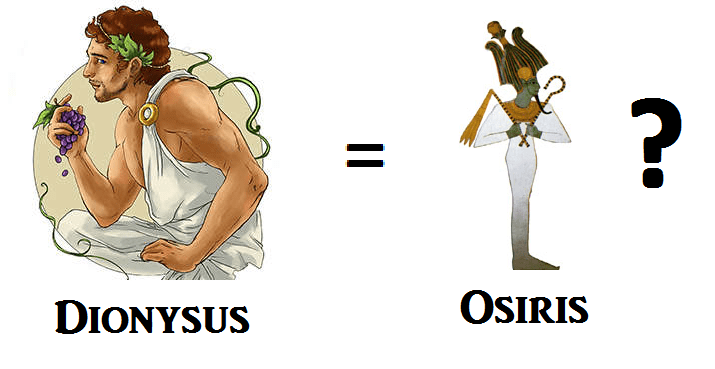
Another one people did was Dionysus = Osiris, because both of them came back from the dead by being sewed together. The problem with that one is it means Dionysus must also be Hades because Osiris is the ruler of the underworld. But Osiris is also the father of Horus who would be Zeus or Helios in the Greek pantheon. Does that mean Dionysus/Hades is also Cronos, the father of Zeus? Or even Hyperion, father of Helios?
It’s my belief that the ancients didn’t really have rules for this. I think that when they contemplated this issue with syncretism they just said something like, “Who can understand the immortal gods?” or more rarely, they expressed a monotheistic belief where every god was simply a reflection of a singular deity. Thus, I believe that even the people who actually practiced these religions in their original forms would’ve found syncretism confusing.
Are there rules for how syncretism works in Cimmeria? Nope, sorry. I went with what I thought worked best in each situation.
There are occasional instances of syncretism, but for the most part each pantheon exists separately from other pantheons. Each rules over its particular worshipers and regions without interfering in the other regions unless some large event precipitates such interference.
What does this decision mean for the cosmology? First, it means that most of the Goblin deities were absorbed by the Olympians through syncretism.
It also means that a character’s access to other planes besides the Material and closely connected planes (Astral, Ethereal, Shadow) is heavily limited.
A Hellenist cannot travel to the Pharaonic afterlife. It simply isn’t possible unless the Hellenist travels with a Pharaonist or is somehow cursed to go to the wrong afterlife.
Another effect is the weakening of divine magic when within another pantheon’s realm. Clerics find their spellcasting powers diminished to those of a cleric half their level when not in their pantheon’s region. This means that Greek priests are weaker than their Cimmerian counterparts, as the Greek pantheon abandoned Greece for a new region, Cimmeria.
That hopefully answers a few questions about how different pantheons work in the world around Cimmeria and provides some background for the move of the Greek pantheon from Greece to Cimmeria (and later on Rome).
-GoCorral




 GoCorral
Leave a reply to Characters of Cimmeria: Other Pantheons – GoCorral Cancel reply