
I have begun my Master’s project in earnest and the goal is slightly different than what I’d been doing before.
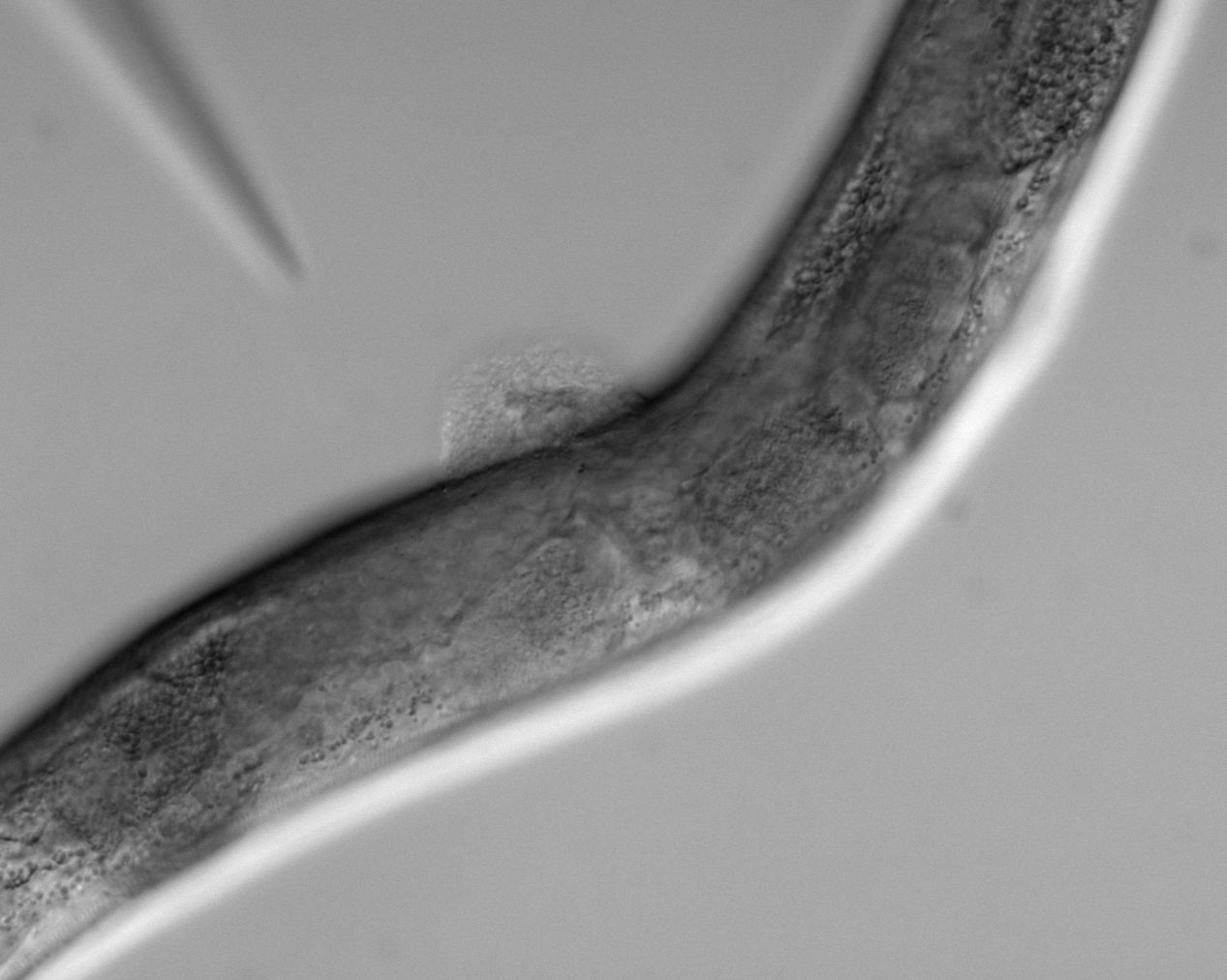
First, I’ll repeat myself. I’m a biologist and I work with introns in C. elegans. C. elegans is a type of nematode worm that naturally lives in soil or on rotting vegetables. It is also one of the most widely used model organisms for biological research.
Introns are unused sections of genes. You’re probably aware that DNA is in our cells and contains the instructions for how an organism functions. The human genome contains around 25,000 genes and those genes are split into two parts, introns and exons.
Exons are the part of that gene that are actually used to produce things in your cells, while introns are spliced out and removed. So why are introns on there at all if they’re removed?
Well it turns out that some introns increase expression of the genes they’re in. My project looks at how placement of those enhancing introns affects expression.
Experiments in plants have shown that an enhancing intron works best when it is placed near the start of a gene. Experiments in C. elegans have suggested that, but no experiment has outright proved it. My project will hopefully do that.
I’m measuring the expression of genes according to how introns affect them, so I get to pick which gene to use. When picking a gene like this scientists often pick what are called reporter genes. The expression of these types of genes is easy to measure, often because they have produce light or fluorescence of some kind. The light tells you whether the gene is on, but also at what level it is turned on based on how bright the cell is.
Previously I was using a reporter gene called GUS. GUS is an enzyme that digests a specially prepared sugar, releasing a blue chemical that was attached to that sugar. The blue chemical is then visible to the naked eye.
There were a number of problems with that experiment though. First, adding the sugar chemical to the worms was a pain, taking about three days to set up and look at. Plus, the blue color was difficult to measure precisely because most of the machines in the lab are set up to measure red or green colors, not blue. Finally, GUS is traditionally a reporter gene for plants, not C. elegans. This could’ve been introducing other problems that we couldn’t easily identify. Thus the use of the GUS reporter gene has been scrapped in favor of another reporter gene.
I’ll be using Green Fluorescent Protein (GFP) as my reporter gene now. GFP is widely used in C. elegans and many other organisms. The protein created by the GFP gene glows green when you shine a red light on it. Very easy to see and measure. None of that three day procedure for GUS. I just pop the worms under the light and take a look.
Why weren’t we using this procedure before if it’s so easy? Two reasons!
Reason number one: C. elegans won’t express GFP without introns in the gene. So does that mean we proceed and hope one intron is enough or do we add the standard amount of introns to get expression? I’ve decided to see what the GFP looks like with the standard introns scientists put in it for C. elegans and without them. I’ll also be testing with an added intron. The whole thing is a little complicated so here’s a diagram to explain.
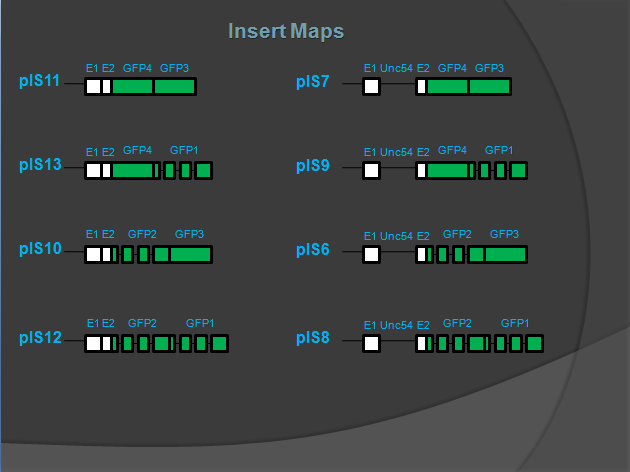
There are eight different constructs I’m making. They are a combination of three different features that are present or not. Are there introns in the first GFP? Yes or no? The second GFP? And is the Unc54 intron there? This allows us to control for the positional effect the standard introns in C. elegans GFP.
Reason number two: Those eight constructs above? Those aren’t made yet! All the GUS constructs were made when I started the project. I’ve been working on making the new constructs for a few months. It could take a few more months to finish.
So my project is to make those constructs, put them into worms, and then see what the worms look like. As I perform these steps I’ll make more posts about what work I’m doing in lab and why its so cool.
-Mister Ed








 GoCorral
Leave a comment