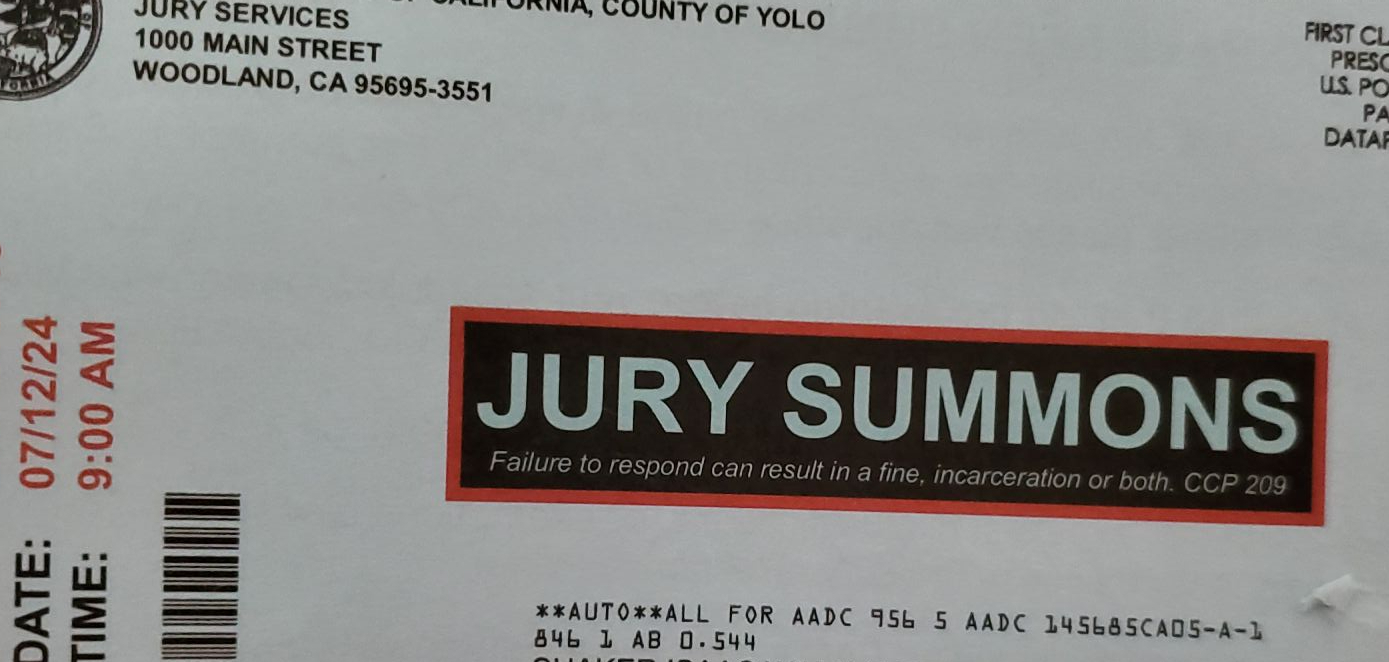
I got my first jury summons this year! Which was funny for me because my wife has gotten a summons nearly ever year. She’s supposed to get the jury summons letters! Not me! The letter came with instructions for checking in on Thursday night before the scheduled reporting date on Friday. I checked on Thursday and I did have to report, but my reporting day would be virtual, not in person.
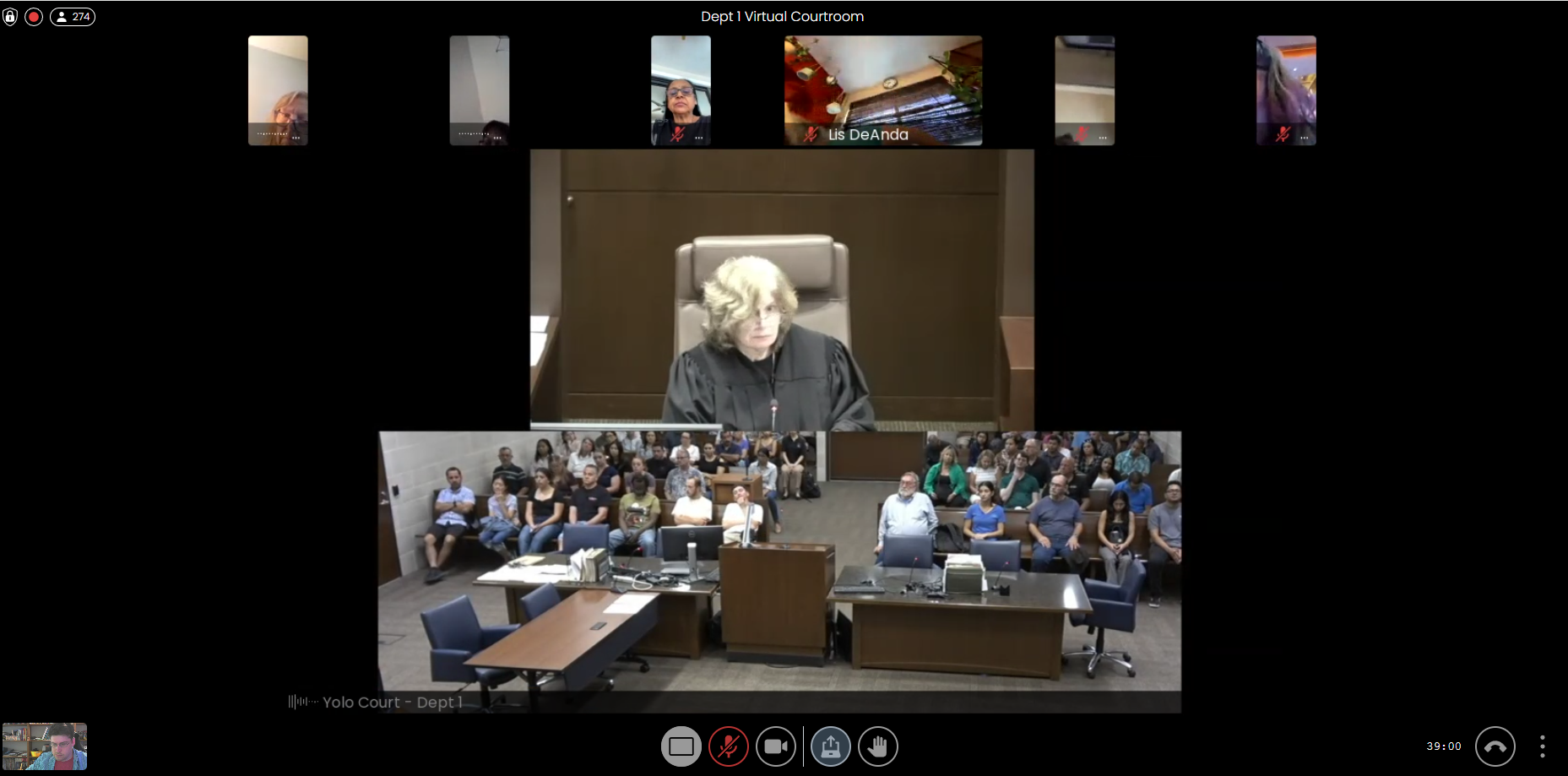
On Friday morning I logged into the video chat service on my browser. I got a nice view of the judge, the courtroom (which did have some prospective jurors in it), and the last six remote participants that had spoken. At the start the clerk in charge of the video call instructed everyone to mute themselves like civilized beings to avoid chaos. Her pleas for order were not heeded. Many older prospective jurors were talking in the background asking their kids how to video call. The most egregious one was a woman walking around a casino with her microphone on the whole time. Absolute disaster, but they went ahead with it anyway. Why muting everyone by default isn’t the setting for this video call, I have no idea.
The judge read through the list of 600 names of people that were called for jury service. There were two trials she was trying to fill with 50 people each. After she called a name she waited a few seconds for that person to say something. When they responded she asked if they were willing to serve on a trial or wanted to get a “hardship.” A hardship would be some sort of logical excuse like, “I have a scheduled surgery during the trial,” or “I’m a caregiver for an infant.” Something like, “The $15/day that jury duty pays isn’t enough to pay my rent,” is apparently not a sufficient hardship excuse. People were allowed to delay until the end in case there were enough volunteers.
I’m lucky enough to be a government worker that gets full pay for jury duty. I volunteered and got put on a two week trial. One week starting on Monday, a break for a week, and then another week of trial.
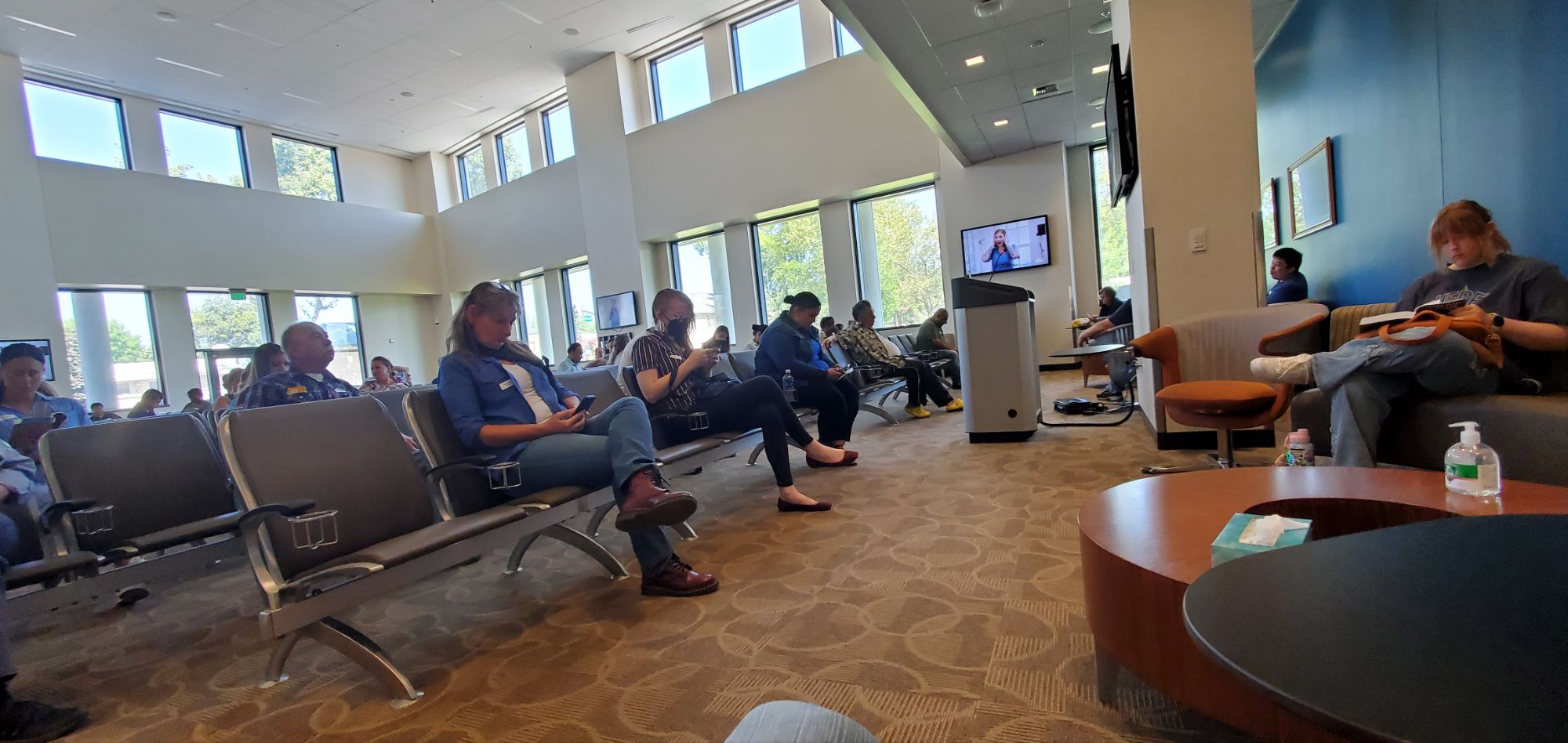
When I reported for jury service I signed a form and sat down in a big airport-style waiting room. The form stated I was a government employee and thus didn’t need the $15/day pay rate. I still get the mileage reimbursement though. I waited for about an hour before my trial group got called up to the third floor of the courthouse where the trial would take place.
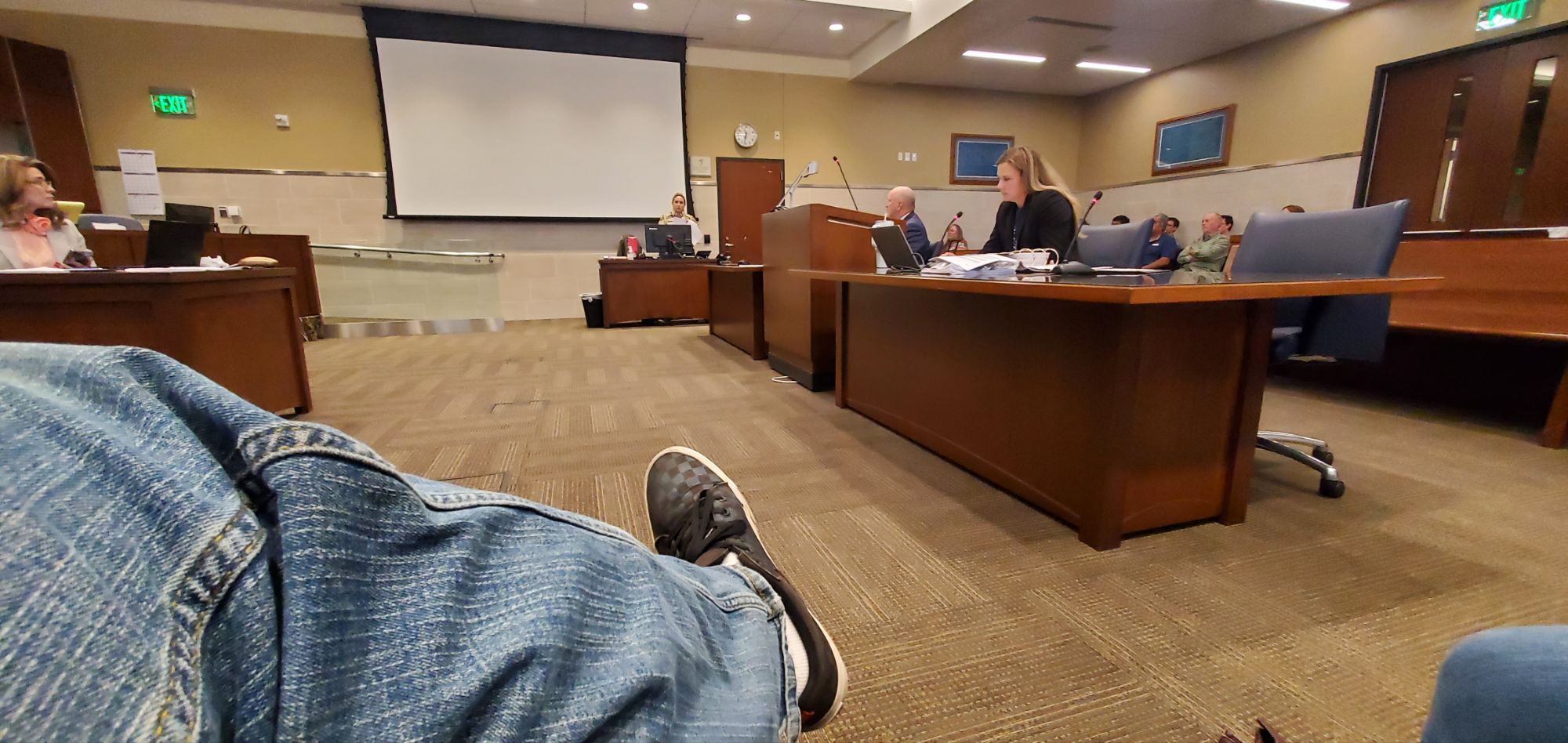
I was initially juror #22 and sat in front of the jury box on a semi-comfy chair. As the trial continued it became clear that the chairs are comfy, so you don’t get irritated, but not TOO comfy, so you don’t fall asleep. At the start the judge explained the outline of the trial. This was a domestic violence case. Then he began asking questions of the jury group. Does anyone know the accused, the victim, or any of the witnesses? Does anyone have a strong bias when someone is accused of domestic violence? Does anyone have strong biases for any criminal court case? Prospective jurors were allowed to answer these questions in private if they wished and a few people exercised that right.
A few of the jurors got excused by the judge. Some because domestic violence was too difficult a topic for them. Others for medical reasons that had been insufficient for “hardship.” As I was juror #22, I sat next to juror #21. He had the most interesting responses to the judge’s questions as he had grown up with the accused and was the cousin of the victim’s ex-husband. Juror #21 was excused eventually, but for some reason they forced him to sit for another day while they asked more questions of everyone. In a smaller jury pool knowing people within the case would be impossible to avoid for everyone on the jury, but it made little sense in a community as big as Yolo County.
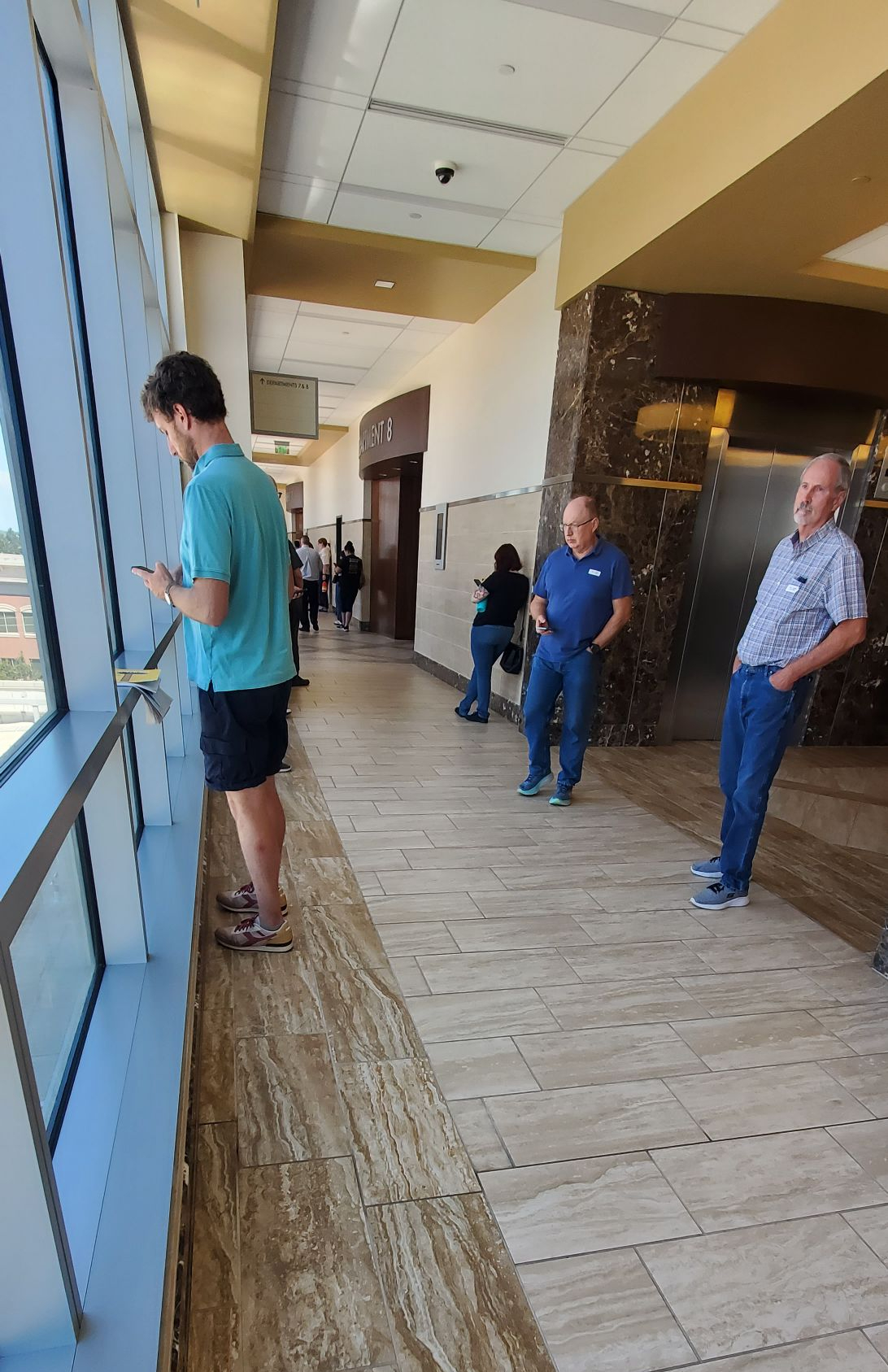
There were many breaks during this long process. Jury selection took two whole days. Show up at 9 in the morning. 15 minute break at 10:30. Hour and a half break for lunch at noon. Another 15 minute break at 3 in the afternoon. Done by 4 on most days.
After a few jurors were excused the prosecutor and the defense attorney began asking us their own questions. Nothing particularly interesting at that point either. It was clear to me that the defense attorney was better. He developed more of a connection with the jurors, didn’t constantly flip through notes, and never forgot what question he was going to ask. He was also clearly older than the prosecutor, so no surprise that he’d mastered all the smaller pieces of the courtroom process.

I was eventually selected as juror #7! About half of the jurors got eliminated by the judge or by the lawyers when they got their turn. I got moved up into the jury box and became juror #7. There were twelve official jurors and two alternates in case one of the main jurors became sick or had an emergency, which did actually happen. Halfway through the trial one of jurors had a personal thing come up and the judge excused them. The first alternate stepped in. The second alternate got to sit through the whole trial and then got sent home once we started deliberations.
The domestic violence trial entered the meat right away with the victim’s witness testimony. She and her live-in boyfriend had twins together. She’s taken them out for dinner without him. When she came back he beat her. The next day her coworkers convinced her to get some help. She got her injuries documented, spoke to the police, went to a domestic violence shelter, and got a restraining order. Only a single incident and she immediately got out of the situation.
After the assault the accused started stalking the victim. The restraining order was no contact, but he kept violating it. He sent her love letters, tried to contact her about the kids and assets (makes some sense, but he needs to go through a third party for that stuff), and sent her insulting messages. This continued until he got arrested and then he switched to using anonymous email accounts to insult the victim. He also set up cameras to watch her house and tracking devices on her car to see where she was going. Strangely, he seemed to respect the physical nature of the restraining order. He sent friends to set up the cameras and tracking devices as he wasn’t allowed near her apartment. And when he saw her in person around town he would leave and not speak to her.
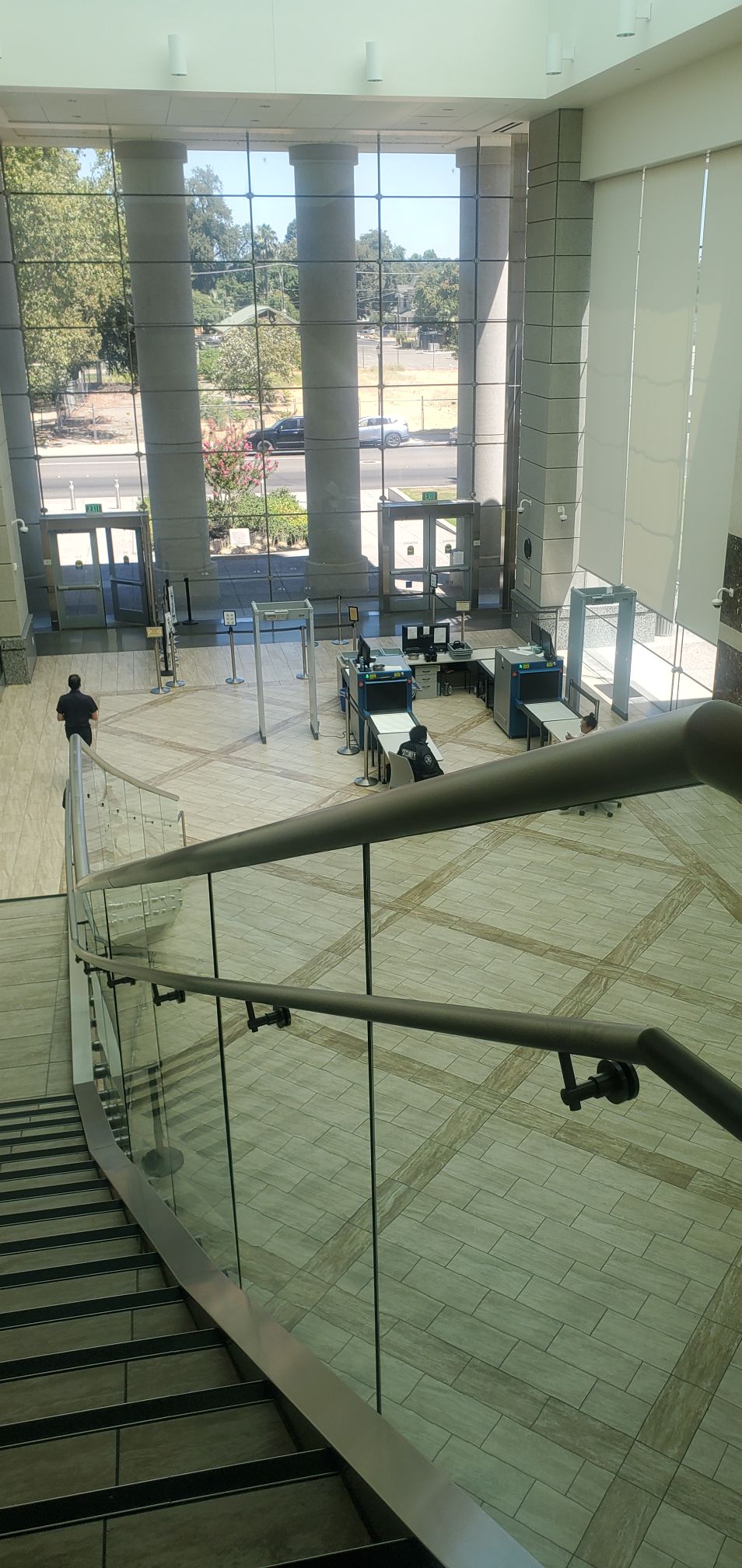
As the trial continued we got lots of breaks in between testimony. I had my lunch outside or in the big airport waiting room. If I went outside I had to come back in through the main entrance. There was a security check point with XRay machines and agents just like the airport. A lot of stuff like airports at this courthouse…
The victim was on the stand for two and a half days. After that, numerous friends, coworkers, and police officers came forward to corroborate her story. Along with the physical evidence of the cameras and trackers that were registered on the accused’s online accounts and phone. The defense attorney gave some cross examination, but when it was the defense’s turn to present their case he provided nothing. During deliberations we all guessed that he’d been given a client who insisted he was innocent, but provided no facts or alternatives to him being guilty.
Jury deliberations took about half a day. I acted as the foreman for the jury. That amounted to me calling for votes on different charges and presenting the final verdict to the judge. We found the defendant guilty on most of the charges. A few of the stalking charges had reasonable doubt that the accused was the one contacting the victim. And there was a charge for “assault with intent to inflict great bodily injury” that we felt wasn’t met. He’d assaulted her, but not in a way that could’ve killed her was our decision. After the verdict was read the judge dismissed us and we all left the courtroom before sentencing. I suppose we could’ve stayed to hear the sentence, but I just wanted to go home.








 GoCorral
Leave a comment